You’ve spent weeks nurturing your strawberry plants from bare roots, watched the first white flowers appear, and then one morning you come out to find every single berry has been eaten overnight. Pigeons on the brassicas. Cabbage white butterflies finding your broccoli before you do. Blackbirds treating your blueberry bushes like a buffet. If you grow food in the UK, you’re in a constant arms race with wildlife — and garden netting is your best weapon.
In This Article
- Why Garden Netting Matters
- Types of Garden Netting
- Choosing the Right Mesh Size
- Netting Structures: Frames, Hoops and Cages
- How to Install Garden Netting Properly
- Protecting Brassicas from Butterflies
- Protecting Fruit from Birds
- Protecting Crops from Other Pests
- Common Netting Mistakes
- Netting and Pollinators: Getting the Balance Right
- Maintenance and Storage
- Frequently Asked Questions
Why Garden Netting Matters
UK gardeners lose an enormous amount of produce to pests and birds every year. The Royal Horticultural Society lists pigeons as one of the most significant garden pests in Britain, capable of stripping a row of cabbages to stalks overnight. Add in cabbage whites, carrot fly, and every thrush and blackbird within a mile, and unprotected crops are basically an invitation.
Netting is chemical-free, reusable year after year, and works. Once you’ve set up a good netting system, the amount of produce you actually get to eat doubles — easily. I’ve been using the same Enviromesh on my raised beds for three seasons now, and the difference compared to my first unprotected year is staggering. Where I lost 60–70% of my brassicas to butterflies, I now lose almost none.
Types of Garden Netting
Not all netting is the same. The type you need depends on what you’re protecting against.
Bird Netting
Lightweight, usually black or green, with a mesh size of 15–20mm. Designed to keep birds off fruit and vegetables while allowing rain and sunlight through. Cheap and widely available — about £5–15 from B&Q, Wilko, or Amazon UK depending on size.
The downside: fine enough to stop birds but not insects. If cabbage whites are your problem, bird netting won’t help.
Butterfly/Insect Netting
Finer mesh, typically 5–7mm. Stops cabbage white butterflies, carrot fly, and most other flying pests. More expensive than bird netting — expect to pay £10–25 for a useful-sized piece. Available from garden centres, Amazon UK, or specialist suppliers like Harrod Horticultural.
Enviromesh (Ultra-Fine Mesh)
The premium option. Mesh as fine as 0.8–1.35mm, which stops virtually everything: butterflies, aphids, carrot fly, flea beetle, even whitefly. Also provides a degree of wind protection and raises the temperature slightly underneath — like a very gentle cloche. Costs about £15–30 for a 2m × 5m sheet.
Enviromesh is what most experienced allotment growers swear by. The fine mesh does reduce airflow and light slightly, so it’s not ideal for everything, but for brassicas and carrots it’s transformed my growing. If you’re just starting out, our guide on essential garden tools covers netting alongside other must-have equipment.
Scaffold Netting
Heavy-duty, large-mesh netting originally designed for construction sites. Some gardeners repurpose it as cheap bird netting, but the mesh is usually too large (50mm+) to stop smaller birds like starlings. Fine for pigeons, but not much else.
Choosing the Right Mesh Size
This is where most people get it wrong — buying netting with the wrong mesh for their specific pest.
- 20mm mesh: stops pigeons, magpies, and larger birds. Won’t stop small birds, butterflies, or insects
- 7mm mesh: stops all birds plus cabbage white butterflies and carrot fly. The sweet spot for most vegetable growers
- 1–2mm mesh (Enviromesh): stops everything including aphids, flea beetle, and whitefly. Maximum protection but reduced airflow
When Smaller Isn’t Better
Ultra-fine mesh stops pollinators too. If you’re netting courgettes, beans, or strawberries, you need bees to access the flowers. Either use larger mesh, or uncover during flowering periods and re-cover once fruit has set. More on this in the pollinators section below.
Netting Structures: Frames, Hoops and Cages
Hoop Tunnels
The simplest option: push semi-circular hoops into the soil along your raised bed or row, drape netting over the top, and secure the edges. Metal hoops from Gardman or similar brands cost about £8–12 for a pack of five.
Advantages: quick to set up and remove, cheap, allows you to adjust height as plants grow. Disadvantages: the netting rests on the hoops, so tall plants push against it and can poke through.
Frame and Net Structures
A more permanent setup: build a timber or aluminium frame around the bed and stretch netting over it. Keeps the netting well clear of the plants and gives you room to work underneath.
This is what I use for my brassica bed — a simple 2m × 1.2m × 1m frame made from treated timber offcuts and covered with Enviromesh. Total cost was about £25 for the mesh plus scrap timber I already had. It’s lasted three years and counting.
Fruit Cages
Purpose-built structures for soft fruit — typically aluminium frames with bird netting sides and roof. Walk-in height so you can pick fruit comfortably. Available from Harrod Horticultural, Gardening Naturally, or Amazon UK from about £80 for a small cage to £300+ for a large walk-in. For a related angle, see our Compost Troubleshooting: Smells, Pests & Slow Decomposition guide.
Worth the investment if you grow a lot of soft fruit. Our piece on seed trays and propagators covers getting your seedlings started, but protecting mature plants from birds is equally important for actually harvesting what you’ve grown.
How to Install Garden Netting Properly
Step 1: Plan Your Coverage
Measure the area you need to cover, adding at least 30cm extra on all sides for securing the edges. Netting that’s too tight tears in wind; netting that’s too short leaves gaps that birds exploit immediately.
Step 2: Set Up Your Support Structure
- Hoops: space them every 60–80cm along the bed, pushed at least 15cm into the soil
- Frames: ensure they’re stable and won’t blow over. Anchor corners with ground stakes if free-standing
- Bamboo canes: for small beds, push four canes into the corners and drape netting over. Add a taller central cane to create a peak that sheds rainwater
Step 3: Drape and Secure
- Drape the netting evenly over the structure with excess fabric on all sides
- Secure the edges to the ground — this is critical. Birds and butterflies find gaps with astonishing efficiency
- Securing methods: bricks or stones (quick but untidy), soil staples (better, about £5 for a pack from any garden centre), or bury the edges in a shallow trench (best for permanent installations)
Step 4: Check for Gaps
Walk around the entire installation and check for any gaps at ground level, loose corners, or places where the netting doesn’t meet the soil. A gap of even 5cm is enough for a determined pigeon to push through.
Protecting Brassicas from Butterflies
Why Brassicas Need Special Attention
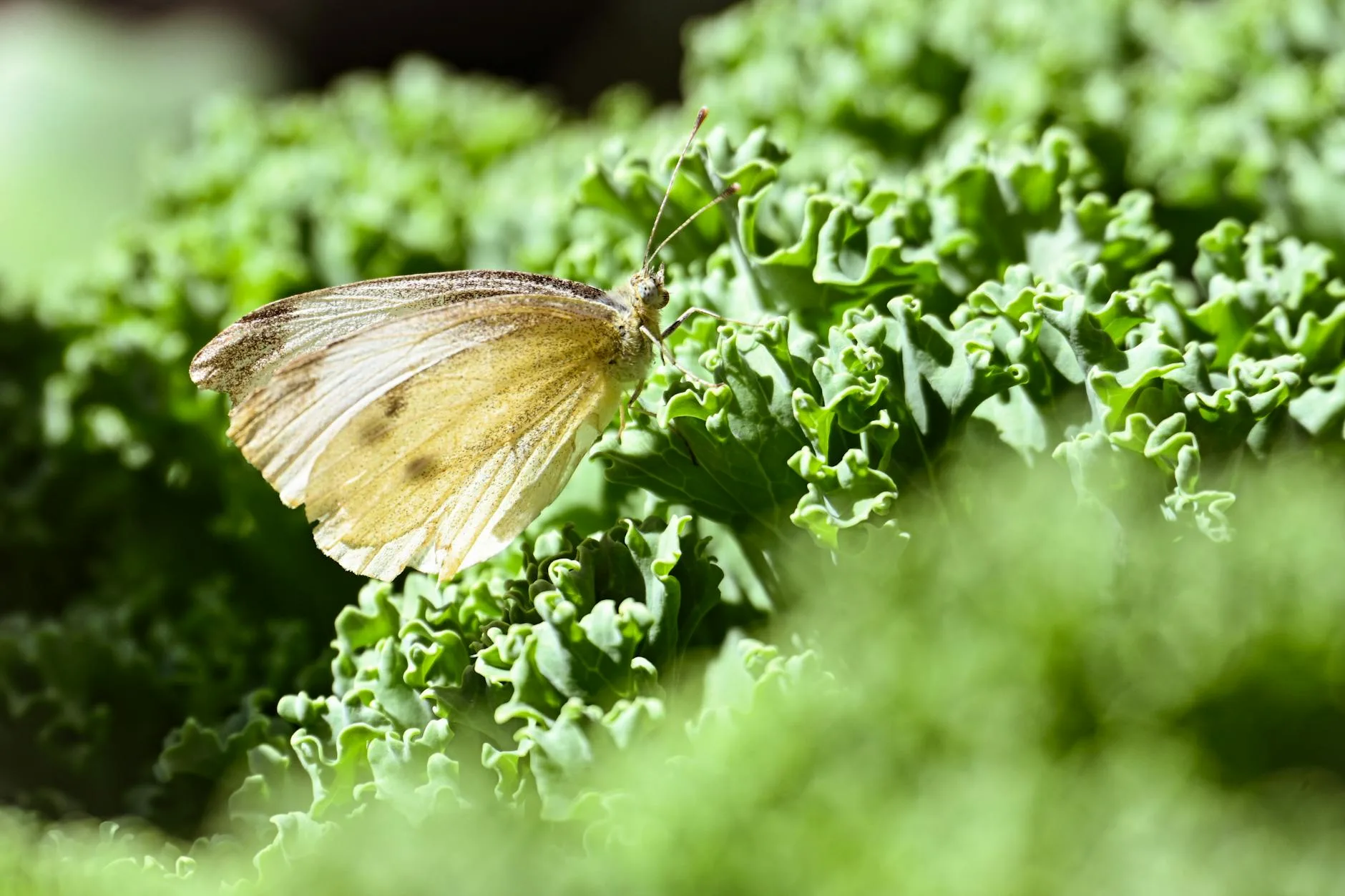
Cabbage white butterflies lay eggs on any brassica leaf they can reach. The caterpillars that hatch will strip plants to skeletons within days. If you grow cabbage, kale, broccoli, cauliflower, or Brussels sprouts in the UK without netting, you’re growing food for caterpillars, not for yourself.
What Works
- 7mm insect mesh or Enviromesh — install before the butterflies arrive (typically April in southern England, May further north)
- Complete coverage — no gaps at the base. Butterflies will crawl under loose edges
- Keep netting on all season — there are multiple generations of cabbage whites from April through September
What Doesn’t Work
Bird netting (mesh too large — butterflies fly straight through). Companion planting (helps marginally but won’t solve the problem alone). Picking off caterpillars by hand (impractical unless you have three plants and infinite patience).
Protecting Fruit from Birds
Soft Fruit
Strawberries, raspberries, blueberries, and currants all need protection from birds. Standard 15–20mm bird netting works well here, and because these crops are pollinated before fruiting, you can cover them once the green fruit appears without blocking pollinators.
Fruit Trees
Harder to net — particularly full-sized trees. Options include: draping netting over the whole canopy (practical only for dwarf rootstock trees), or using a fruit cage structure. For larger trees, some gardeners use visual deterrents (reflective tape, fake hawks) alongside netting the lower branches. Our Fleece and Cloches: Protecting Young Plants in Spring guide is useful alongside this.
Timing
Cover fruit crops when fruit begins to colour, not when it’s ripe. By the time you notice the first ripe berry, the birds have already noticed it too. They will take unripe fruit if they’re hungry enough — blackbirds are particularly shameless about this.
Protecting Crops from Other Pests
Carrot Fly
Carrot fly is low-flying — rarely above 60cm. A barrier of fine mesh (or even a 60cm-tall solid barrier of polythene) around your carrot bed stops them reaching the crop. Enviromesh over hoops works perfectly.
Flea Beetle
Attacks young brassica seedlings, rocket, and radishes. Tiny holes all over the leaves — looks like someone’s fired a miniature shotgun at your plants. Enviromesh from the moment of planting is the only reliable organic prevention.
Cabbage Root Fly
Lays eggs at the base of brassica stems. Brassica collars (cardboard or foam discs around the stem) help, but fine mesh netting that reaches the soil prevents the adult fly from reaching the plants at all.
Common Netting Mistakes
Leaving Gaps at the Base
The most common failure. If netting doesn’t seal completely to the ground, pests get in. Pigeons will walk under loose netting. Butterflies will crawl. Secure every edge — no exceptions.
Netting Too Late
Prevention beats cure. Get insect mesh on brassicas at planting time, not after you spot caterpillars. Get bird netting on fruit when it starts to form, not when it starts to colour.
Using the Wrong Mesh Size
Bird netting on brassicas is pointless against butterflies. Enviromesh on crops that need pollination blocks bees. Match the mesh to the threat.
Not Checking Underneath
Netting traps pests in as well as keeping them out. Check under netting regularly for caterpillars that hatched from eggs laid before covering, or slugs and snails that were already in the bed.
Buying Cheap Netting That Tangles
Very cheap netting (the kind from pound shops) tangles in on itself, tears when you try to untangle it, and is a nightmare to reuse. Invest in decent quality — a £15 piece of Enviromesh lasts years. False economy to buy the cheapest option.
Netting and Pollinators: Getting the Balance Right
Crops That Need Pollination
Courgettes, squash, beans, strawberries, and most fruit trees need insect pollination to set fruit. If you cover these with fine mesh during flowering, you won’t get a harvest.
Solutions
- Use bird netting (larger mesh) instead of insect mesh — it stops birds while letting pollinators through
- Remove netting during the day when bees are active, replace it in the evening
- Wait until fruit has set before covering — for strawberries, this means waiting until you see small green fruits forming
- Hand pollinate — for courgettes and squash under mesh, use a small paintbrush to transfer pollen from male to female flowers
Crops That Don’t Need Pollination
Brassicas (you’re harvesting leaves, not fruit), carrots (harvesting roots), and lettuce/salad crops can stay under fine mesh their entire growing season. Cover and forget — which is one reason Enviromesh and brassicas are such a perfect match.
Maintenance and Storage
During the Season
- Check for damage weekly — holes from wind, UV degradation, or animals chewing through
- Repair small holes with cable ties or by sewing with garden twine
- Clear debris from the surface — fallen leaves and soil create wet patches that degrade the netting faster
End of Season
- Remove carefully — pull netting free of any plants that have grown into it. Rushing this tears both the netting and the plants
- Wash if dirty — a bucket of warm soapy water and a gentle scrub removes soil and green staining
- Dry completely before storing — damp netting grows mould
- Store rolled, not scrunched — rolled netting on a cardboard tube untangles far easier than a crumpled ball. Store in a shed or garage away from UV light
Good netting lasts 5–10 years with proper care. Enviromesh is particularly durable. The cheapest bird netting might only last 2–3 seasons before UV damage makes it brittle.
Our article on the best vegetables for beginners covers which crops are easiest to grow — many of them benefit enormously from proper netting.
Frequently Asked Questions
What mesh size do I need for garden netting? It depends on the pest. For pigeons and large birds, 15–20mm bird netting works. For cabbage white butterflies and carrot fly, you need 5–7mm insect mesh. For maximum protection including aphids and flea beetle, use Enviromesh with 0.8–1.35mm mesh.
Will garden netting stop bees from pollinating my crops? Fine mesh (under 7mm) will block bees. For crops that need pollination — like courgettes, strawberries, and beans — use larger mesh bird netting, remove mesh during flowering, or hand-pollinate. Brassicas and root vegetables don’t need pollination, so fine mesh can stay on all season.
How do I secure garden netting to the ground? The most reliable methods are soil staples (metal U-pins pushed into the ground, about £5 for a pack), burying the edges in a shallow trench, or weighing down with bricks. Avoid leaving any gaps — even 5cm is enough for pests to find their way in.
How long does garden netting last? Quality Enviromesh lasts 5–10 years with proper care. Standard bird netting typically lasts 2–4 seasons before UV damage makes it brittle. Store netting rolled on a tube, clean and dry, out of direct sunlight to maximise lifespan.
When should I put netting on my brassicas? At planting time — before the first cabbage white butterflies appear. In southern England, this means March or April. Don’t wait until you see caterpillars; by then, eggs have already been laid and the damage is underway. Keep netting on until you harvest.