It’s mid-April, you’re scrolling past photos of someone’s homegrown strawberries on Instagram, and you’re thinking “I could never grow those.” You can. Strawberries are one of the easiest fruits to grow in the UK, they produce a crop within months of planting, and they don’t need a garden — a sunny windowsill, a hanging basket on a balcony, or a single pot on a patio will do.
The difference between a supermarket strawberry and one picked warm from your own plant is staggering. Shop strawberries are bred for shelf life and uniform appearance. Homegrown ones are bred for flavour — intensely sweet, fragrant, and soft enough that they’d never survive a lorry journey. Once you’ve tasted a sun-warmed Mara des Bois from your own patch, you genuinely won’t want to go back.
In This Article
- Choosing the Right Varieties for the UK
- When to Plant Strawberries in the UK
- Growing Strawberries in Raised Beds
- Growing Strawberries in Pots and Containers
- Growing Strawberries in Hanging Baskets
- Soil, Feeding and Watering
- Protecting Your Strawberry Crop
- Runners and Propagation
- Seasonal Care Calendar
- Common Problems and Solutions
- Frequently Asked Questions
Choosing the Right Varieties for the UK
Not all strawberries are equal, and picking the right variety for your situation makes the difference between a disappointing handful and a proper summer glut.
Early Season (June-Cropping)
These produce one big flush of fruit in June/July. They give you the biggest individual berries and the heaviest single harvest.
- Elsanta — the UK commercial standard. Reliable, sweet, firm fruit. Widely available from garden centres. Not the most exciting flavour but consistently productive
- Cambridge Favourite — a British classic that’s been going since the 1940s. Slightly softer than Elsanta, better flavour, excellent disease resistance. My go-to recommendation for first-time growers
- Honeoye — early cropping (often from late May), good-sized fruit, tolerates heavier soils better than most varieties
Perpetual (Everbearing)
These crop repeatedly from June through to October, giving you smaller but more frequent harvests. Brilliant if you want strawberries for months rather than one big glut.
- Mara des Bois — the flavour king. French variety with an intense wild strawberry fragrance. Smaller fruit but the taste is exceptional. Needs a sheltered spot and good soil
- Flamenco — high-yielding perpetual with good-sized fruit. Sweet and glossy. Does well in containers
- Buddy — compact plants bred specifically for hanging baskets and containers. Good flavour, attractive trailing habit, produces all summer
Alpine Strawberries
Tiny but intensely flavoured. They don’t produce runners, stay compact, and tolerate partial shade better than regular strawberries.
- Alexandria — the most popular alpine variety. Grows easily from seed, fruits all summer, amazing in salads
- Mignonette — slightly larger fruit than Alexandria, vigorous plants, self-seeds readily
The RHS plant finder has full growing data for every UK-suitable variety if you want to explore beyond these picks.
When to Plant Strawberries in the UK
Timing depends on whether you’re buying bare-root runners (dormant plants) or potted plants.
Bare-Root Runners
- Best planted: Late March to early May (spring) or September to October (autumn)
- Autumn planting gives plants time to establish roots over winter, resulting in a stronger crop the following summer
- Spring planting means you’ll get some fruit the first summer, but a smaller crop than established autumn-planted stock
- Available from specialist nurseries like Ken Muir, Marshalls, or Dobies — about £5-12 for 6-12 runners depending on variety
Potted Plants
- Plant: Any time from March to September
- More expensive than bare-root (about £3-5 per plant from garden centres, B&Q, or Dobbies)
- The advantage is you can plant them and get fruit within weeks in summer
- Available at most garden centres from April onwards
Cold-Stored Runners (60-Day Plants)
A trade trick that’s increasingly available to home growers:
- These are bare-root runners harvested in winter and kept in cold storage at -2°C
- When planted in spring/early summer, the shock of warming up triggers aggressive flowering
- You get fruit in about 60 days from planting — brilliant for a quick crop
- Available from specialist suppliers like Ken Muir — slightly more expensive but worth it for instant gratification
Growing Strawberries in Raised Beds
Raised beds are the ideal setup for strawberries if you have the space. The elevated soil warms faster in spring, drains better, and keeps fruit off wet ground.
Setting Up Your Strawberry Bed
- Choose a sunny, sheltered spot — strawberries need at least 6 hours of direct sun for decent fruit
- Fill with a mix of multi-purpose compost and garden soil (roughly 60/40) — pure compost compacts over time, but pure soil in a raised bed is too heavy
- Work in a handful of blood, fish, and bone meal per square metre before planting
- Space plants 30-45cm apart in rows, with 60cm between rows
- Plant at the right depth — the crown (where leaves emerge) should sit just above soil level. Too deep and the crown rots; too shallow and roots dry out
Why Raised Beds Work Well
- Drainage — strawberries hate waterlogged roots. Raised beds drain faster than flat ground, especially on clay soil
- Warmth — soil in raised beds warms up 2-3 weeks earlier in spring, giving you earlier flowers and earlier fruit
- Access — easier to net against birds, easier to pick, and less bending
- Weed control — you start with clean compost, so weed pressure is lower in the first season
If you’re building a bed from scratch, our guide to raised beds for beginners covers materials, sizing, and filling in detail. For keeping your bed weed-free, see our guide to preventing weeds in raised beds.
Strawberry Bed Rotation
Strawberry plants produce well for about 3-4 years, then decline. After year 4:
- Remove old plants (don’t compost them — they may carry disease)
- Don’t replant strawberries in the same bed for at least 2 years (to break disease cycles)
- Use runners from healthy plants to start a new bed elsewhere (see Runners section below)
- The old bed works brilliantly for brassicas or legumes, which benefit from the residual fertility
Growing Strawberries in Pots and Containers
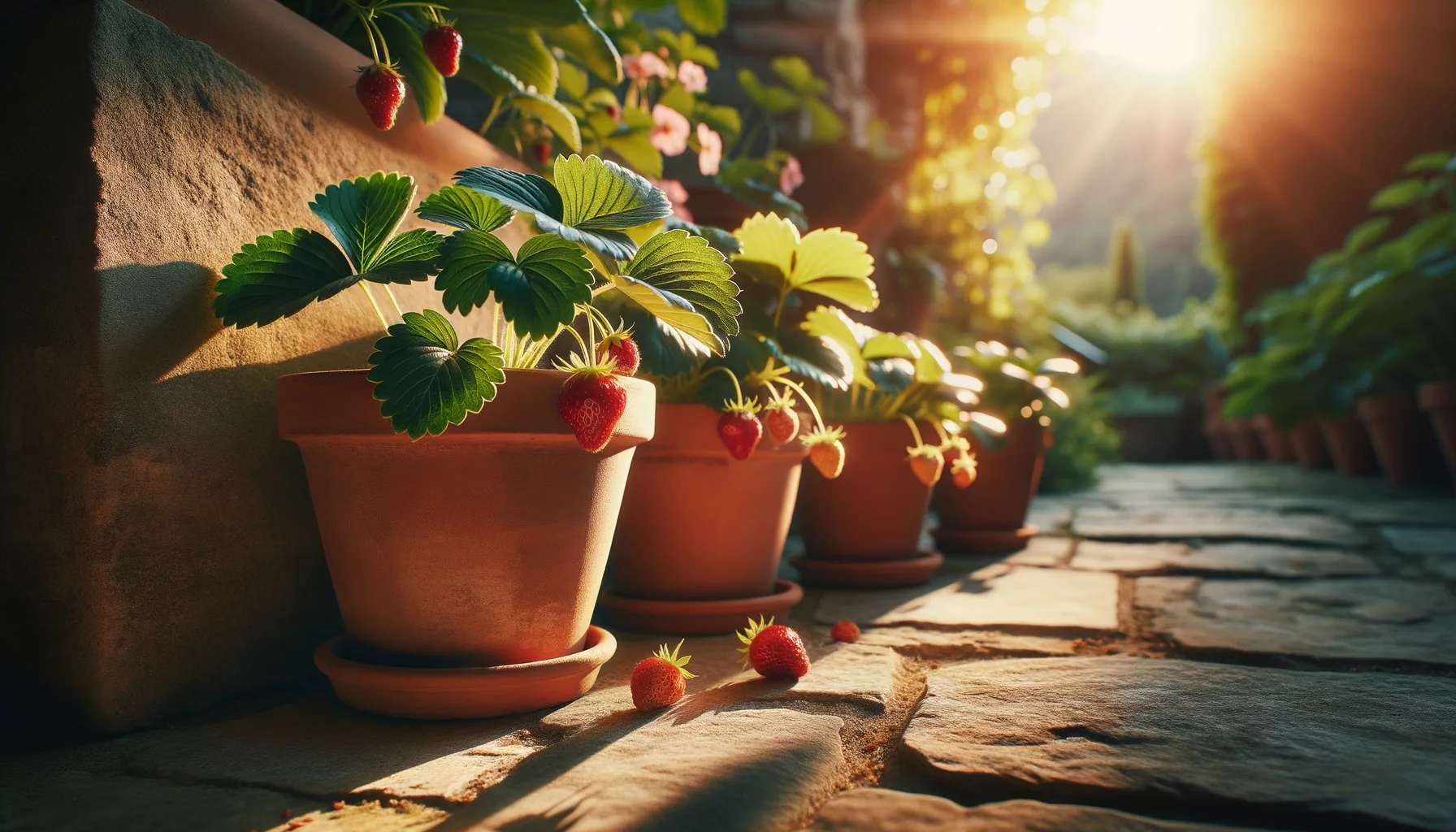
No garden? No problem. Strawberries are one of the best fruits for container growing — they have shallow roots, don’t need much space, and look attractive in flower and fruit.
Choosing the Right Container
- Minimum pot size: 30cm diameter for 3 plants, or a single plant in a 20cm pot
- Strawberry towers (stackable tiered planters) give you 20+ plants in a small footprint — about £20-35 from Amazon UK or garden centres
- Terracotta looks beautiful but dries out faster than plastic. If you choose terracotta, line the inside with a bin bag (with drainage holes poked through the bottom) to reduce water loss
- Window boxes work well — 60cm length fits 3 plants comfortably
- Growbags are a budget option (about £3-4 from B&Q or garden centres) — cut planting holes in the top and they’ll produce a decent first-year crop
Potting Up
- Use peat-free multi-purpose compost with added perlite (about 20% by volume) for drainage
- Add a slow-release fertiliser to the compost at planting time — strawberry-specific feed or tomato fertiliser both work
- Plant so the crown sits at compost level — not buried
- Water thoroughly after planting and keep consistently moist (not waterlogged) throughout the growing season
- Move pots to the sunniest spot available — at least 5-6 hours of direct sun daily
Container Advantages
- Portability — move pots to follow the sun or bring under cover in heavy rain (keeps fruit clean and reduces grey mould)
- Slug protection — raised pots are naturally harder for slugs to reach. Copper tape around the rim adds extra protection
- Season extension — bring pots into a greenhouse or conservatory in March to get fruit 2-3 weeks earlier than outdoor plants
- Clean fruit — no soil splash on the berries, which is a common issue with ground-level growing
Growing Strawberries in Hanging Baskets
Hanging baskets are brilliant for strawberries — the trailing habit looks beautiful when laden with fruit, birds find them harder to reach, and slugs aren’t an issue at all.
Best Basket Setup
- Basket size: 35cm diameter minimum. The larger the basket, the more plants it holds and the less often you’ll need to water
- Use a solid-sided hanging basket (like a wall-mounted half basket or a solid bowl type) rather than an open wire basket with moss lining — coco or moss liners dry out extremely fast in summer and you’ll be watering twice daily
- Alternatively: Use a wire basket with a plastic liner inside the moss for moisture retention
- Plant 4-5 plants per 35cm basket — they’ll fill out quickly
Planting a Strawberry Basket
- Line the basket with a solid liner or high-quality coco liner
- Fill with lightweight, peat-free compost mixed with water-retaining gel crystals (Miracle-Gro Water Storing Gel, about £5 from garden centres)
- Plant strawberries at equal spacing around the basket edge, angling them slightly outward so they cascade over the sides
- Add one plant in the centre
- Water thoroughly until water runs from the base
- Hang in a sunny, sheltered position — south or south-west facing is ideal
Maintenance Tips for Baskets
- Watering is the make-or-break factor. In summer, baskets may need watering every single day — possibly twice in hot weather. If you’re going away, consider a drip irrigation system on a timer (basic kits from about £15 at Wickes or Screwfix)
- Feed weekly with a high-potassium liquid fertiliser (tomato feed) once flowers appear
- Remove runners as they appear — they divert energy from fruit production in baskets. If you want new plants, root the runners in separate small pots while still attached to the mother plant
- Replace plants every 2-3 years. Basket strawberries exhaust themselves faster than bed-grown ones because the restricted root space limits their energy reserves
Soil, Feeding and Watering
Soil Requirements
Strawberries prefer:
- pH 6.0-6.5 — slightly acidic. Most UK garden soil and multi-purpose compost falls naturally in this range
- Well-drained — they’ll tolerate most soil types except heavy, waterlogged clay. If your soil is heavy, add grit and organic matter to improve drainage, or grow in raised beds
- Rich in organic matter — dig in well-rotted compost or manure before planting. For soil health basics, our garden soil types guide explains how to work with what you’ve got
Feeding Schedule
- At planting: Work in blood, fish, and bone meal or a general-purpose granular feed
- From flowering onward: Switch to a high-potassium liquid feed (tomato feed at half strength) every 7-10 days. Potassium drives fruit production and sweetness
- After fruiting: Apply a balanced granular feed to help plants build energy for next year’s crop
- Don’t overfeed with nitrogen — it produces lush leaves at the expense of fruit. Tomato feed (high-K, low-N) is ideal during fruiting
Watering
- Consistent moisture is key — strawberries hate drought AND waterlogging
- Water at the base, not overhead. Wet foliage encourages grey mould (botrytis), which is the number one strawberry disease in the UK
- Mulch around plants with straw (hence “straw-berry”), bark chips, or landscape fabric to conserve moisture, suppress weeds, and keep fruit clean
- In containers: Check daily in summer. If the top 2cm of compost feels dry, water. Don’t let pots sit in saucers of water
Protecting Your Strawberry Crop
Growing strawberries is easy. Actually eating them before the birds, slugs, and squirrels do is the challenge.
Bird Netting
Birds are the biggest threat to ripe strawberries. A blackbird will strip a plant clean in a single morning.
- Drape netting over a frame (bamboo canes and string work fine) — don’t lay it directly on plants, as birds can peck through it
- Fruit cages are the gold standard if you’re growing multiple beds (about £50-150 depending on size, from Harrod Horticultural or Garden Organic)
- Remove netting when fruit is finished to avoid trapping wildlife over winter
Slug and Snail Control
- Straw mulch creates a dry barrier that slugs dislike crossing
- Copper tape around pot rims gives slugs a mild electric shock
- Beer traps (a shallow dish of cheap lager sunk into the soil) attract and drown slugs reliably
- Nematodes (Nemaslug from Nemasys, about £12-15 per application) are biological slug killers watered into the soil. Completely organic and safe for other wildlife
- Raised containers naturally reduce slug access
Grey Mould (Botrytis)
The fuzzy grey coating on rotting berries. Caused by humid, still conditions and wet fruit.
- Water at the base, never overhead
- Space plants adequately for air circulation
- Remove any mouldy fruit immediately — it spreads to neighbouring berries fast
- Pick fruit as soon as it’s ripe — overripe fruit is more susceptible
- Good ventilation and dry fruit are your best defences
Runners and Propagation
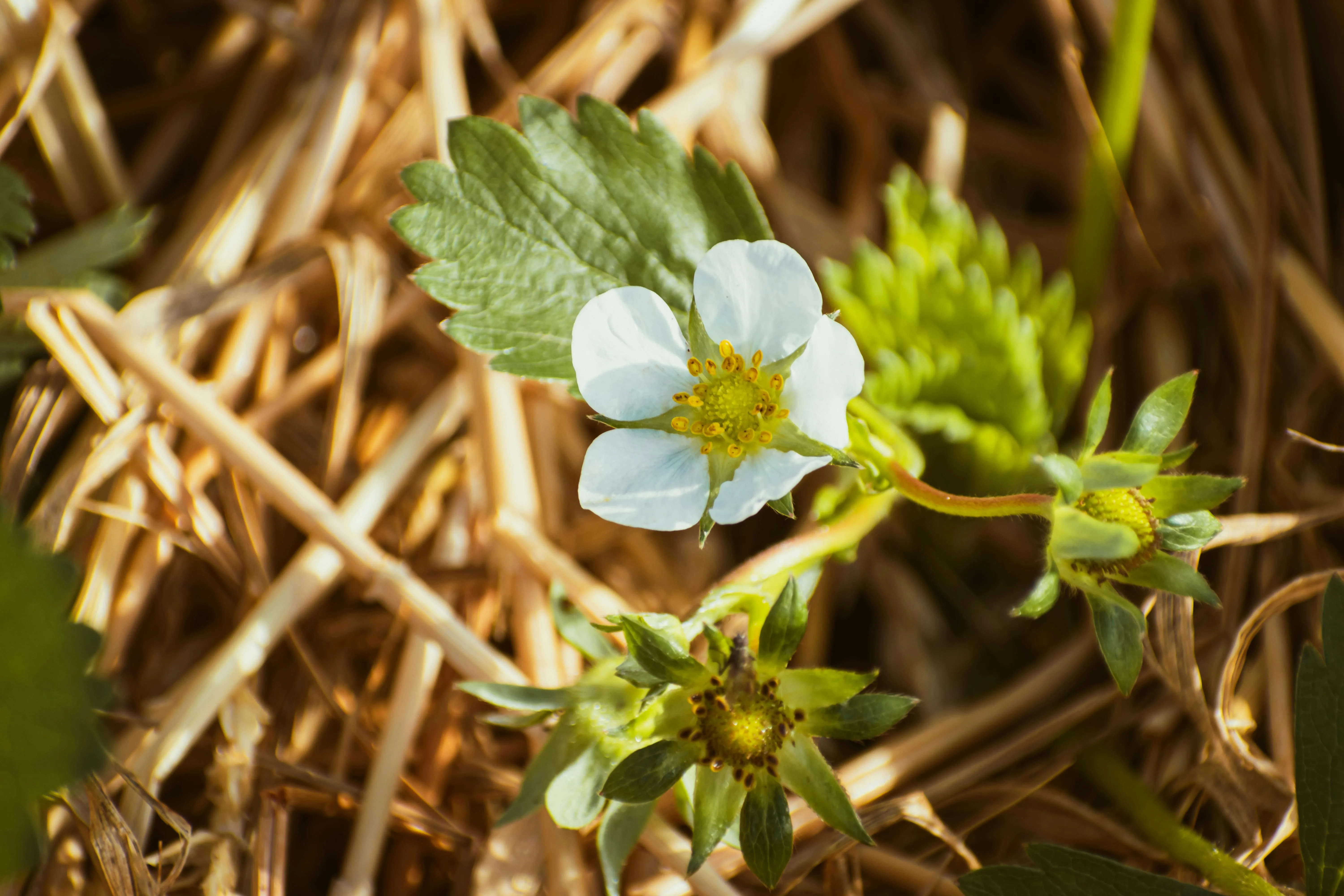
Strawberry plants send out long stems called runners (or stolons) with baby plants at the tip. This is free propagation — each healthy plant can produce 4-8 new plants per season.
How to Root Runners
- Identify healthy runners from your best-producing plants (not the weaker ones)
- Pin the baby plant at the runner tip into a small pot of compost placed next to the mother plant, using a bent wire or small stone to hold it down
- Keep the pot watered — the baby plant will root within 3-4 weeks
- Once rooted (give it a gentle tug — if it resists, it’s rooted), cut the runner stem connecting it to the mother plant
- Grow on for a few weeks, then plant out in its permanent position
Runner Management
- If you want fruit: Remove runners throughout the season. They divert energy from fruit production. Snip them off at the base as they appear
- If you want new plants: Let runners develop from July onward, after the main cropping is done. Limit each plant to 3-4 runners maximum to avoid exhausting the mother
- Replace your strawberry plants every 3-4 years using runners from year-2 plants (which are at their most vigorous). Year-4+ plants produce fewer and smaller berries
Seasonal Care Calendar
Early Spring (March)
- Remove any dead or yellowed leaves from last autumn
- Top-dress beds with a thin layer of well-rotted compost
- Apply a general-purpose granular feed
- Start watering regularly as growth begins
- Move container-grown plants to a sunny position (or into a greenhouse for earlier cropping)
Late Spring (April-May)
- Watch for late frosts — cover flowering plants with fleece overnight if frost is forecast (frost kills open flowers, which means no fruit from those flowers)
- Begin liquid feeding when the first flowers open
- Apply straw mulch around ground-level plants once fruit starts forming
- Pinch off runners from plants you want maximum fruit from
Summer (June-September)
- Pick fruit every 2-3 days — ripe berries left on the plant attract mould and pests
- Continue weekly liquid feeding throughout fruiting
- Water consistently — irregular watering causes small, misshapen fruit
- Remove any mouldy or damaged fruit immediately
- Net against birds if not already done
Autumn (October-November)
- After the last fruit, cut back foliage on June-bearing varieties to about 10cm above the crown. This removes old, potentially diseased leaves and lets light reach the crown
- Don’t cut perpetual varieties — just remove any obviously damaged leaves
- Apply a balanced granular feed to prepare plants for winter
- Root and transplant runners to their permanent positions
- Tidy beds, remove straw mulch (it harbours overwintering pests)
Winter (December-February)
- Little to do. Plants are dormant
- Protect crowns with a layer of straw or fleece in severe frost (below -10°C)
- Plan next year’s planting — order bare-root runners in January for March delivery
- Check container-grown plants haven’t dried out completely — even dormant plants need occasional watering in dry winters
Common Problems and Solutions
Small, Hard Fruit
Cause: Usually poor pollination or drought stress during fruit development. Fix: Ensure plants are in a sheltered spot where pollinators can reach them. Water consistently when fruit is forming. In very windy or cold spring weather, hand-pollinate by brushing a soft paintbrush across open flowers. For a related angle, see our Raised Beds vs In-Ground Gardening: Pros and Cons guide.
Lots of Leaves, No Fruit
Cause: Too much nitrogen fertiliser, too much shade, or plants are too young (first-year plants sometimes prioritise growth over fruit). Fix: Switch to high-potassium feed (tomato fertiliser). Ensure at least 6 hours of sun. Remove some runners to redirect energy to fruiting.
Fruit Rotting Before Ripening
Cause: Grey mould (botrytis), usually from overhead watering or poor air circulation. Fix: Water at the base only. Space plants further apart. Remove affected fruit immediately. Improve ventilation around plants.
Plants Dying Back
Cause: Crown rot (usually from planting too deep or waterlogged soil) or vine weevil larvae eating the roots (common in containers). Fix: For crown rot — improve drainage, replant at the correct depth. For vine weevil — apply biological nematodes (Nemasys Vine Weevil Killer, about £12) in spring and autumn. Check pot-grown plants by gently tipping out — vine weevil grubs are white, C-shaped, and about 1cm long.
Runners Everywhere
Cause: Normal strawberry behaviour — they’re trying to reproduce. Fix: Not a problem unless you don’t want them. Snip runners at the base if you want the plant to put energy into fruit. Let them develop if you want new plants for next year. Our What to Grow in a UK Allotment: Month-by-Month Planting Guide guide is useful alongside this.
Frequently Asked Questions
When is the best time to plant strawberries in the UK? Autumn (September-October) gives the best results — plants establish root systems over winter and produce a strong crop the following summer. Spring planting (March-April) works too but you’ll get a smaller first-year harvest. Container plants can go in any time from March to August.
How many strawberry plants do I need for a family? For a family of four, 20-25 plants gives you a decent supply for fresh eating throughout the season. If you want enough for jam, freezing, or daily eating for several weeks, aim for 40-50 plants. For a small household (1-2 people), 10-12 plants is usually plenty.
Do strawberries come back every year? Yes — strawberries are perennial and return year after year. Individual plants produce well for 3-4 years before declining. After that, replace them with new runners from your healthiest plants. With good rotation, a strawberry patch is essentially permanent.
Can I grow strawberries indoors? You can, but they need lots of direct light (a south-facing windowsill minimum) and hand-pollination since there are no bees indoors. Results are usually disappointing compared to outdoor growing. A better approach is starting plants in a greenhouse or conservatory in spring for earlier outdoor cropping, then moving them outside once flowering begins.
Why are my strawberries small and tasteless? Usually a combination of the wrong variety (supermarket-style varieties bred for size and firmness rather than flavour), insufficient sun, or overwatering during ripening. For maximum flavour, grow a heritage variety like Mara des Bois, give them full sun, and reduce watering slightly once fruit starts colouring — mild water stress concentrates sugars.