Pruning apple cordons in pots is mostly about timing, not bravery. Winter sets the structure, summer controls the side shoots, and the pot decides how hard you can push the tree without stressing it. If you keep those three things separate, a potted cordon stays neat, fruitful and small enough for a patio, fence line or narrow side return.
In This Article
- The Short Version for Potted Apple Cordons
- What Makes a Potted Cordon Different
- Winter Pruning: The Structure Jobs
- Summer Pruning: The Fruiting Jobs
- Month-by-Month Apple Cordon Pruning Calendar
- Feeding, Watering and Pot Care After Pruning
- Common Mistakes When Pruning Apple Cordons in Pots
- Frequently Asked Questions
The Short Version for Potted Apple Cordons
A potted apple cordon needs two pruning sessions each year. Do the main structural pruning in winter, usually December to February while the tree is dormant. Then do summer pruning in July or August once the new side shoots have become woody at the base.
The winter job is about shape. You remove dead, damaged or badly placed growth, shorten overcrowded spurs, and keep the main leader tied neatly to its support. The summer job is about fruiting. You cut new side shoots back to around three leaves from the basal cluster so the tree puts energy into fruit buds rather than long leafy growth.
For a patio cordon, the basic kit is cheap:
- Bypass secateurs: about £12-£35 for a decent pair from Screwfix, B&Q, Darlac, Spear & Jackson or Felco’s entry-level range.
- Soft tree ties: £4-£10 a pack.
- Rootstock-friendly pot: £25-£70 for a 40-60 litre frost-resistant container.
- John Innes No. 3 compost: roughly £6-£9 per 25 litre bag.
- High-potash feed: £5-£12, often sold as tomato feed.
If you only remember one rule, make it this: do not keep snipping randomly every time the tree looks untidy. Cordons need controlled pruning at the right points. Too many little cuts at the wrong time can push soft regrowth, reduce fruiting wood and make the tree harder to read next season.
What Makes a Potted Cordon Different
An apple cordon is a trained tree, usually grown as a single angled or vertical stem with short fruiting spurs along its length. In open ground, the roots can explore and buffer mistakes. In a pot, everything is tighter: water, nutrients, root space and temperature all change faster.
That is why pruning apple cordons in pots needs a slightly lighter touch than pruning a mature cordon in a border. A container-grown tree can crop well, but it has less stored energy if you over-prune, forget to water, or let the compost dry out in July.
Rootstock matters
Most potted apple cordons should be on a dwarfing or semi-dwarfing rootstock. M27 is very small and needs careful watering. M9 is a common choice for cordons and patio fruit, while M26 gives more vigour and needs a larger pot. If you are buying new, ask the nursery what rootstock the tree is on; do not just buy by apple variety.
A young cordon from a UK fruit nursery usually costs about £25-£45 bare-root in winter, or £35-£70 in a pot during the growing season. Cheaper supermarket patio apples can be fine, but they are not always trained as proper cordons.
Our guide to apple tree varieties for UK gardens is useful if you are still choosing between dessert, cooker and cider types.
Pot size changes the pruning decision
A 25 litre pot is only suitable for a young tree or short-term growing. For a productive cordon, I would aim for 40-60 litres. Bigger is better if the patio can take the weight. Terracotta looks lovely but dries fast; plastic and resin pots hold moisture better and cost less, usually £20-£55 for a good large container.
The smaller the pot, the less harshly you should prune. A hard winter cut on a root-restricted tree can trigger strong upright shoots in spring, then you spend summer fighting the tree. In a pot, steady correction beats dramatic rescue work.
Supports are part of pruning
A cordon without support is just a small apple tree leaning hopefully. Use horizontal wires, a fence, a trellis panel or sturdy bamboo canes fixed to the pot and wall. Galvanised wire kits cost roughly £10-£25, vine eyes are about £3-£8, and soft ties cost very little.
Tie the main stem before pruning if it is moving in the wind. A rocking rootball damages fine roots, which matters more in a container than in open soil.
Winter Pruning: The Structure Jobs
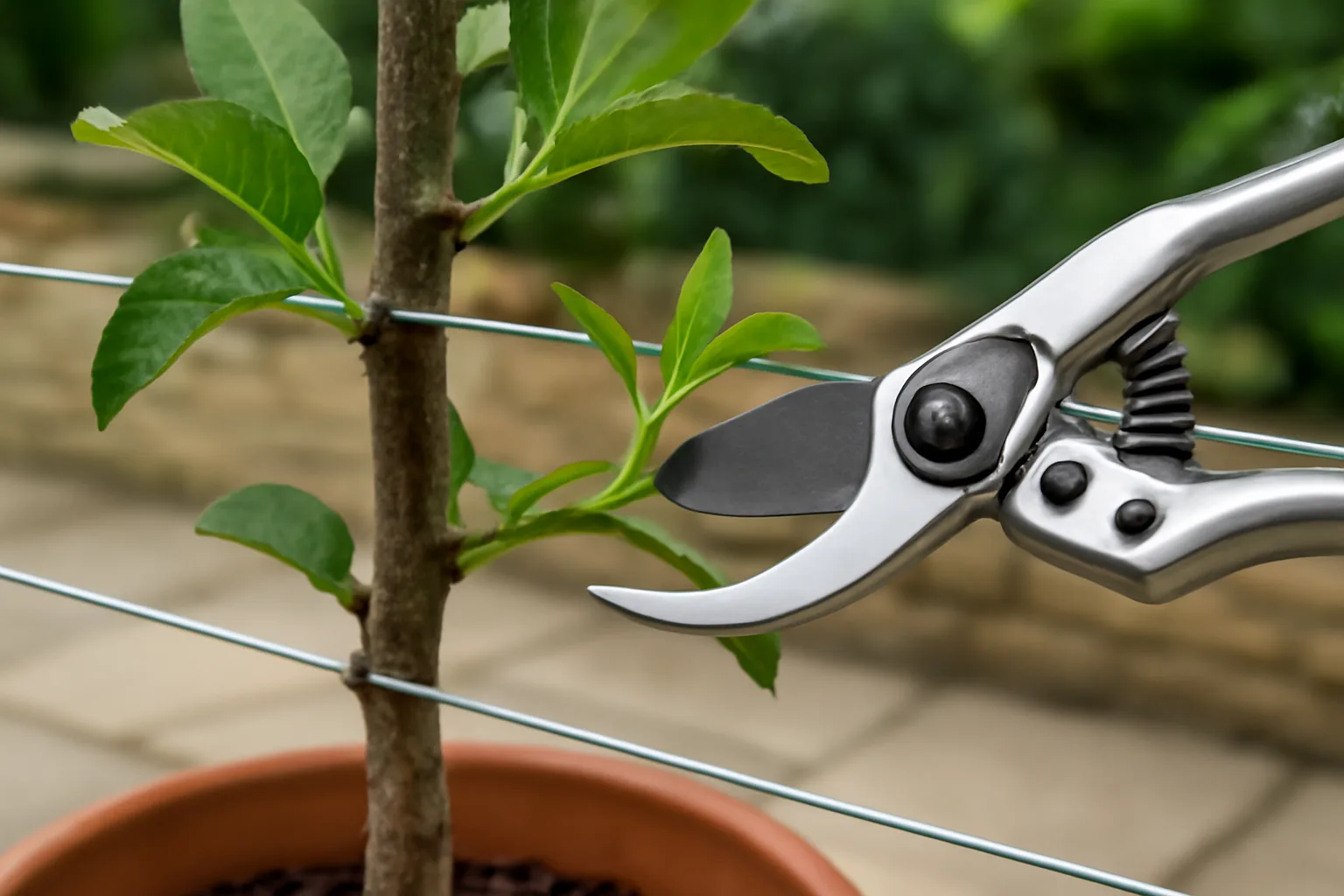
Winter pruning is best done when the tree is dormant and leafless, usually from December to February. Avoid pruning in hard frost, and avoid wet, miserable days if you can. Clean cuts heal better when the wood is not frozen or dripping. This is the structural half of pruning apple cordons in pots, so work slowly and keep the trained framework in mind.
The Royal Horticultural Society has detailed guidance on apple pruning, and the timing principles are the same for cordons. The difference is that your aim is not to create an open goblet tree. You are maintaining a trained stem with short fruiting spurs.
What to remove first
Start with the obvious cuts:
- Dead wood: cut back to healthy wood or remove the whole dead spur.
- Damaged growth: remove snapped, rubbed or diseased shoots.
- Crossing shoots: keep the one that sits flatter and closer to the cordon framework.
- Strong upright shoots: remove or shorten them if they are stealing energy from the trained shape.
Use sharp bypass secateurs, not anvil secateurs, for live apple wood. Bypass blades make cleaner cuts on small shoots. If your secateurs crush rather than slice, sharpen or replace them before working along the whole cordon.
How to treat spur systems
The short knobbly growth along a cordon is where most of the fruiting happens. Do not strip it all out because it looks messy. Old spur systems can become congested, though, especially in a pot where airflow is already limited by a wall or fence.
If a spur cluster has become a woody fist with lots of tiny weak shoots, thin it lightly. Remove one or two tired pieces back to a small side shoot or bud. You are making space, not rebuilding the tree in one go.
Leader and extension growth
If the cordon has not yet reached its final height or length, keep the leader and tie it in. Shorten only if it has outgrown the support or become too strong for the pot. Once the cordon reaches the space you want, cut the leader back in winter to a suitable bud and maintain that boundary.
This is where potted cordons are different from open-ground ones. A large in-ground cordon can carry more extension growth. A pot-grown cordon often crops better when you keep the frame modest and well fed.
Summer Pruning: The Fruiting Jobs
Summer pruning is the job that keeps a cordon looking like a cordon. Without it, the side shoots race away and shade the fruiting spurs. Do it too early and the tree may respond with more soft growth. Do it too late and the shoots have already spent the tree’s energy.
For most UK gardens, late July to August is the normal window. The test is simple: the base of the new shoot should feel firmer and slightly woody, not soft and bendy from tip to base.
The three-leaf rule
For new side shoots growing from the main stem, cut back to about three leaves beyond the basal cluster. The basal cluster is the little rosette of leaves at the base of the shoot. You are shortening the extension growth while leaving enough leaf to feed the spur.
If a side shoot grows from an existing side shoot, cut it harder, usually to one leaf beyond its base. That stops secondary growth building out into a bushy mess.
What not to cut in summer
Do not remove the whole spur just because it has leaves. Do not cut every shoot flush to the stem. Do not strip leaves away from ripening fruit unless they are badly shading or rubbing. Apples need leaf area to size up and sweeten.
If your tree is weak, pale or drought-stressed, water and feed first. Heavy summer pruning on a struggling potted tree is like asking someone to run faster after taking their lunch away.
Aftercare the same day
After summer pruning, water the pot thoroughly. A 40-60 litre container may need 10-20 litres of water in hot weather, depending on compost and pot material. Mulch the surface with composted bark or grit if it dries fast.
If codling moth, aphids or woolly aphid have been a problem, check the shortened shoots while you are working. Our guide to netting fruit trees against birds is useful later in the season, but insect and disease checks start much earlier.
Month-by-Month Apple Cordon Pruning Calendar
Use this as a working calendar rather than a rigid rulebook. Weather shifts the dates. Scotland, exposed gardens and cold patios can run two or three weeks behind sheltered southern gardens.
January
Check ties and supports before pruning. If the tree rocks in the pot, firm the compost and secure the main stem. Do winter pruning on mild days: dead wood, damaged shoots, crowded spurs and any growth that has broken the cordon shape.
Do not feed yet. The tree is dormant.
February
Finish winter pruning if January was too cold. This is also a good month to repot a young cordon if it has filled its container. Move up one pot size rather than jumping from a small nursery pot to a huge tub. Fresh John Innes No. 3 compost gives better structure than multipurpose compost for long-term fruit.
If you need a new potted tree, bare-root cordons are often still available for about £25-£45.
March
Avoid major pruning once buds are swelling unless you are removing dead or damaged wood. Start watering if the compost is dry below the surface. Rain does not always reach a pot tucked against a wall.
Top-dress with fresh compost and a slow-release fruit fertiliser if the tree is staying in the same pot. Expect to pay about £6-£12 for a small box of fruit-tree fertiliser.
April
Watch blossom and frost. Do not prune healthy growth now. If frost is forecast while the tree is in blossom, move the pot to a sheltered spot if possible or cover it with fleece overnight. Garden fleece costs about £5-£15 and earns its keep on patio fruit.
Our garden fleece and cloches guide explains how to protect plants without trapping damp for days.
May
Tie in the leader and any useful extension growth while it is still flexible. Remove only obviously misplaced shoots that are growing straight into a wall, path or neighbouring plant.
Start checking moisture seriously. Potted apples can dry quickly once leaves expand. A basic moisture meter costs £8-£15, though a finger pushed 5cm into the compost is often just as useful.
June
Thin fruit if the tree has set too heavily. For a young potted cordon, fewer apples of better size are better than lots of small fruit that exhaust the tree. Leave one or two fruits per cluster once natural June drop has happened.
Do not do full summer pruning yet unless the shoots have firmed up early. Soft green shoots cut in June often regrow.
July
Start summer pruning if the new side shoots are woody at the base. Cut side shoots from the main stem back to about three leaves beyond the basal cluster. Cut secondary side shoots to one leaf.
Water deeply after pruning. If you are away for a week, a drip bottle or simple patio watering kit can help. Our watering systems guide covers the kit options, from £10 bottle spikes to £40-£100 timer systems.
August
Finish summer pruning. Check ties because stems thicken over summer and soft ties can bite if forgotten. Loosen and retie where needed.
If the tree is carrying fruit, keep watering steady. Irregular watering can contribute to fruit drop and poor sizing, especially in black plastic pots that heat up on patios.
September
Harvest early and mid-season varieties as they ripen. Do not prune heavily. Remove only broken shoots or obvious disease.
After harvest, make notes. Which side cropped well? Which spur cluster was too crowded? Those notes make winter pruning much easier. This is the unglamorous bit that experienced gardeners quietly do.
October
Reduce feeding and let the tree slow down. Clear fallen leaves from the pot surface, especially if scab or mildew has been present. Move the pot out of a wind tunnel if autumn storms rock the tree.
If the cordon has outgrown its support, plan changes now rather than hacking it back in a panic in spring.
November
Once leaves have dropped, inspect the framework. Do not rush into pruning if the tree is not fully dormant. Clean secateurs, buy replacement ties, and check the pot feet or drainage holes are clear.
This is also a good time to order bare-root replacements or extra cordons if you want a small trained-fruit run along a fence.
December
Begin winter pruning on mild days. Work slowly along the cordon from base to tip. Keep the main stem clear, thin congested spur systems, and remove strong upright growth that does not fit the trained shape.
If the tree is young and still being formed, prioritise tying and framework over fruit. A well-shaped cordon in year two is worth more than a handful of apples on a messy frame.
Feeding, Watering and Pot Care After Pruning
Pruning and pot care are linked. A cordon in open ground can usually forgive a missed watering. A potted cordon cannot. Every cut changes growth, and the roots have to support the response inside a limited compost volume.
The RHS has useful advice on growing fruit in containers, including the importance of loam-based compost and regular watering. That matters here because cordons are often grown against warm walls where pots dry faster.
Feeding
In March, top-dress with fresh compost and a balanced or fruit-tree fertiliser. From flowering through fruit swelling, a high-potash liquid feed every week or two can help. Tomato feed is the usual budget option and costs about £5-£12.
Do not overdo nitrogen. Too much leafy growth gives you more to summer prune and can reduce fruiting quality.
Watering
Water deeply, less often, rather than giving the pot a token splash every evening. In hot July weather, a 50 litre pot may need daily checking. Terracotta dries faster than plastic, and pots against brick walls can dry even faster.
If you are growing more than one potted fruit tree, a simple drip kit is worth considering. It is not glamorous, but neither is losing a crop because you went away for a weekend.
Repotting and root pruning
Every few years, a potted cordon may need repotting or root pruning. If water runs straight through, growth is weak, or the tree lifts from the pot as one solid root mass, it is time to act. Late winter is the best window.
You can move to a slightly larger pot or remove the tree, trim some outer roots, refresh the compost and replant into the same container. If that sounds nerve-racking, get help from a local gardener; a small patio-fruit repotting job might cost £50-£120 depending on access and time.
Common Mistakes When Pruning Apple Cordons in Pots
Most potted cordon problems come from treating the tree like either a full-sized apple tree or a decorative patio plant. It is neither. It is a trained fruit tree in a restricted root space.
Pruning everything in winter
Winter is for structure, not for removing every side shoot. If you cut all new shoots hard in winter, you can push vigorous leafy growth and lose the summer-pruning rhythm. Leave fruiting spurs in place and save side-shoot shortening for summer.
Forgetting the pot
If a cordon is hungry, dry or root-bound, pruning will not fix it. Pale leaves, tiny fruit and weak shoot growth usually point to root-zone problems before pruning problems.
Letting ties bite
Ties that were loose in spring can bite into bark by August. Check them during summer pruning. Soft rubber ties, jute twine or purpose-made tree ties are cheap; damaged bark is not.
Buying the wrong tree
A patio apple in a pot is not always a cordon. If you want cordon training, buy a tree sold as a cordon or maiden suitable for training, on the right rootstock. Trying to force a badly shaped patio tree into a neat cordon is possible, but it is more work than starting with the right plant.
For broader fruit choices, read our guide to growing fruit in containers and our picks for small UK garden fruit trees.
Expecting a huge crop
A potted cordon is about neat, manageable fruit, not supermarket quantities. A mature, healthy cordon can crop well for its size, but the win is fresh apples from a narrow space. If you want buckets of fruit, plant a larger tree in the ground.
The best potted cordons are boringly consistent: tied in, watered, summer pruned, lightly winter pruned, fed, then left alone. That is the rhythm.
Frequently Asked Questions
When should I prune apple cordons in pots? Do structural pruning in winter, usually December to February, and summer pruning in July or August once the new side shoots are woody at the base.
How hard should I prune a potted apple cordon? Prune lightly and regularly. In summer, shorten new side shoots from the main stem to about three leaves beyond the basal cluster. In winter, focus on dead, damaged, crowded or badly placed growth.
Can I grow an apple cordon in a container? Yes, if you use the right rootstock, a large enough pot and reliable support. A 40-60 litre container is a sensible target for a productive patio cordon.
What tools do I need? A sharp pair of bypass secateurs, soft tree ties, suitable support wires or canes, fresh loam-based compost and a high-potash feed are enough for most potted cordons.
Why is my potted cordon making long leafy shoots? It may have been pruned at the wrong time, overfed with nitrogen, or allowed to grow too strongly from a small number of buds. Use summer pruning to shorten side shoots once their bases have firmed.
Should I repot a potted apple cordon every year? No. Top-dress each spring, then repot or root-prune every few years when the tree becomes root-bound, dries too quickly or starts growing weakly.