You’ve got a small garden — maybe 6m x 4m, maybe less — and you want a fruit tree. Not a full orchard, just something that produces actual fruit you can pick and eat. But every time you search online, the advice assumes you’ve got a meadow in the Cotswolds. Rootstock charts, pollination groups, canopy management — all you want to know is which tree won’t outgrow your garden and which one will actually give you fruit without a PhD in horticulture.
The great news is that modern dwarf rootstocks have made fruit trees realistic for even the smallest UK gardens. A tree on the right rootstock will stay under 2.5m tall, fit in a border or large pot, and produce full-sized fruit within 2-3 years of planting. You don’t need an orchard. You need one good tree and ten minutes of reading.
In This Article
- What Makes a Tree Small-Garden Friendly
- Best Apple Trees for Small Gardens
- Best Pear Trees for Small Gardens
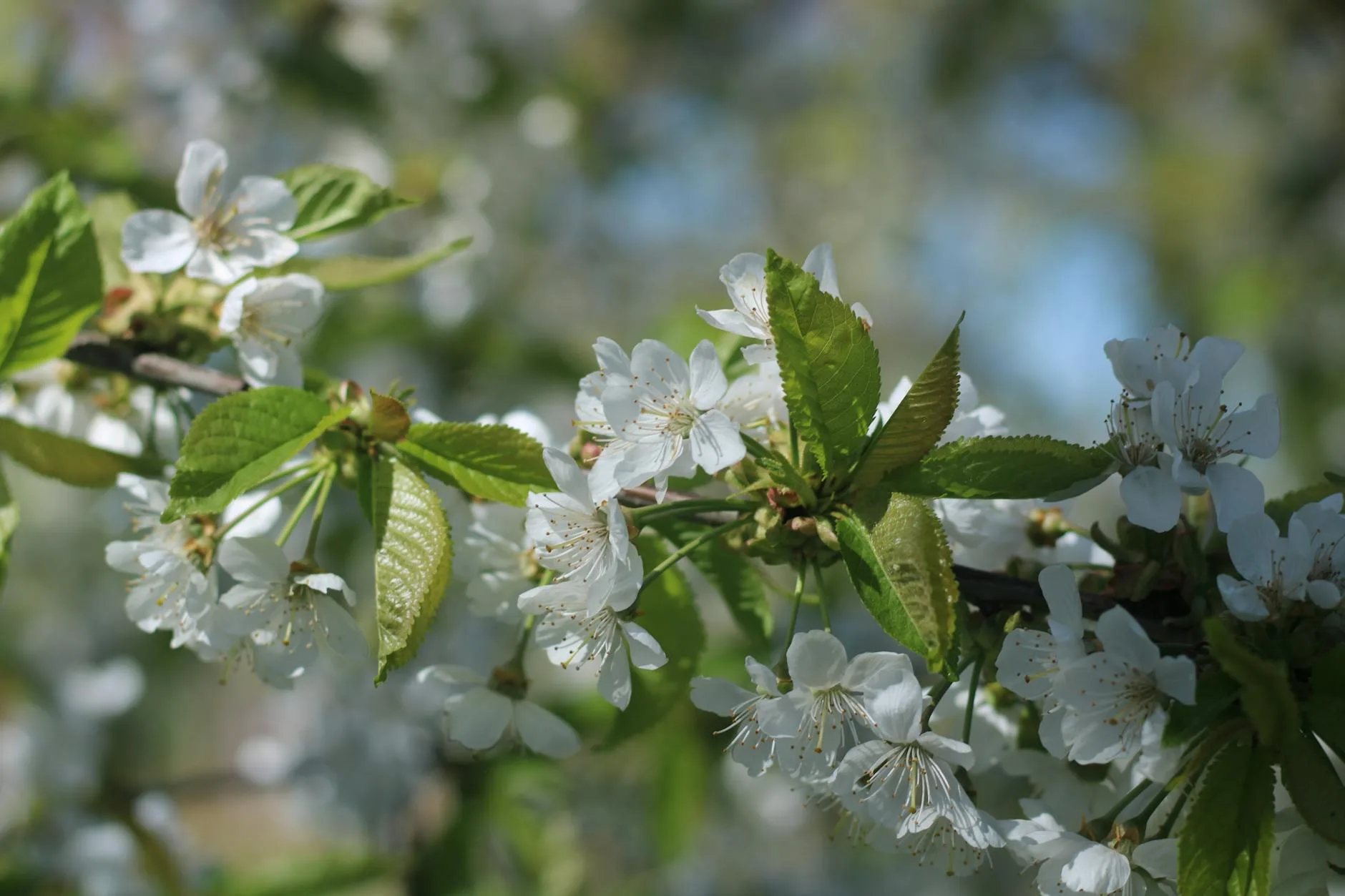
- Best Plum and Cherry Trees
- Best Fruit Trees for Pots
- Fig Trees: The Unexpected Winner
- Pollination Explained Simply
- Planting and First-Year Care
- Pruning Basics for Small Trees
- Where to Buy Fruit Trees in the UK
- Frequently Asked Questions
What Makes a Tree Small-Garden Friendly
Rootstock Is Everything
The variety (Bramley, Cox, Conference) determines the fruit. The rootstock determines the size of the tree. Every fruit tree you buy is actually two trees grafted together — the variety on top and the rootstock below. For small gardens, you want dwarfing or very dwarfing rootstocks:
- M27 (apple) — very dwarfing. Final height 1.5-2m. Perfect for pots and tiny spaces. Needs permanent staking because the root system is too small to anchor the tree. Produces less fruit than larger trees but plenty for a family.
- M9 (apple) — dwarfing. Final height 2-2.5m. The most popular small-garden rootstock. Good fruit production, manageable size. Needs staking for the first 5 years.
- M26 (apple) — semi-dwarfing. Final height 2.5-3.5m. The maximum for small gardens. More vigorous, better on poor soil, can eventually stand without a stake.
- Quince C (pear) — dwarfing. Final height 2.5-3m. The standard choice for small-garden pears.
- Pixy (plum/cherry) — dwarfing. Final height 2.5-3m. The only truly dwarfing rootstock for stone fruit.
Tree Forms for Small Spaces
- Bush trees — open-centred, 1.5-2.5m tall. The easiest to manage and pick from. Our recommendation for most small gardens.
- Cordon trees — single-stemmed, grown at 45° against a wall or fence. Take up almost no ground space (30cm per tree). You can fit 4-6 cordons in 2m of fence.
- Espalier — trained flat against a wall with horizontal tiers. Beautiful and productive. Needs a south or west-facing wall and annual pruning, but rewards you with a living feature as well as fruit.
- Patio trees — compact varieties bred for container growing. True patio trees (not just standard trees in pots) stay under 1.5m and fruit on short branches.
Best Apple Trees for Small Gardens
Best All-Rounder: ‘Braeburn’ on M9 (about £20-30)
Braeburn is the UK’s most popular eating apple for good reason — it’s crisp, sweet-sharp, stores well, and the tree is compact on M9 rootstock. It flowers in mid-season (Group 3), so finding a pollinator isn’t difficult. Fruit ripens in October and keeps in a cool garage until January. My parents’ garden has a Braeburn on M9 that’s been producing consistently for six years in about 3 square metres of space.
Best Cooker: ‘Bramley’s Seedling’ on M27 (about £25-35)
Bramley on full-sized rootstock grows into an enormous tree. On M27, it stays under 2m and still produces enough apples for crumbles, pies, and sauce through autumn and winter. You’ll need a pollination partner (any Group 3 apple within 50m, or a crab apple). The flavour is unmistakable — there’s a reason Bramley has been the UK’s cooking apple since 1809.
Best for Eating Fresh: ‘Discovery’ on M9 (about £20-28)
Discovery is an early-season dessert apple that ripens in August — weeks before most varieties. The fruit is red-skinned, crisp, and beautifully flavoured when eaten straight from the tree. It doesn’t store well (eat within 2 weeks of picking), but nothing beats a fresh Discovery still warm from the sun. Self-fertile, so no pollinator needed.
Best for Flavour: ‘Cox’s Orange Pippin’ on M26 (about £22-30)
If you asked a hundred British gardeners to name their favourite apple, Cox would win by a mile. The flavour is complex — honey, pear, spice — and unlike anything you’ll find in a supermarket because Cox doesn’t travel or store as well as modern commercial varieties. It’s slightly more demanding to grow (susceptible to scab and mildew), but on M26 in a sheltered spot with decent soil, it’s worth the effort. The RHS apple growing guide recommends Cox for UK gardens with some shelter from late frosts.
Best Pear Trees for Small Gardens
Best Overall: ‘Conference’ on Quince C (about £20-30)
Conference is the easiest pear to grow in the UK. It’s partially self-fertile (will set some fruit alone, more with a pollinator), tolerates less-than-ideal conditions, and produces reliably even in cooler parts of the country. The fruit is the long, green pear you see in every supermarket — but home-grown Conference, ripened properly off the tree, has a buttery sweetness that commercial fruit never matches.
Best for Flavour: ‘Doyenné du Comice’ on Quince C (about £22-35)
Comice is widely considered the finest-flavoured pear available in the UK. Rich, juicy, and intensely sweet when perfectly ripe. The catch: it needs a warm, sheltered spot (south-facing wall ideal) and a pollinator (Conference works perfectly). If you can provide those conditions, the fruit is spectacular. If you’ve already got raised beds near a south wall, planting a Comice espalier above them makes brilliant use of the space.
Best for Small Spaces: ‘Beth’ on Quince C (about £20-28)
Beth is a compact pear that naturally stays small even without aggressive pruning. The fruit is sweet, slightly musky, and ripens early (late August). It’s partially self-fertile and resistant to most common diseases. If you want a pear tree you can largely leave alone, Beth is the low-maintenance choice. For a related angle, see our Best Fruit Cages 2026 UK: Protect Your Crop guide.
Best Plum and Cherry Trees
Best Plum: ‘Victoria’ on Pixy (about £20-30)
Victoria plum is the UK’s favourite — sweet enough to eat fresh, firm enough for jam, and grows almost anywhere in England and Wales. On Pixy rootstock, it stays under 3m. Self-fertile, so no pollination worries. The tree produces heavily — expect 10-20kg of fruit per year once established. The main pest risk is wasps in September, which love the ripe fruit.
Best Cherry: ‘Stella’ on Gisela 5 (about £22-35)
Stella is the go-to cherry for home gardeners because it’s self-fertile (most cherry varieties need a pollinator, which is impractical in a small garden). On Gisela 5 rootstock, it reaches 2.5-3m. The dark red cherries ripen in July and taste superb — sweet and juicy with none of the tartness you get from some varieties. Your main competition for the fruit will be birds. Netting the tree in June is essential unless you’re willing to share.
Best for Flavour: ‘Opal’ Plum on Pixy (about £20-28)
If you want a plum with more complexity than Victoria, try Opal. It’s a Swedish variety with golden-red skin and rich, sweet flesh. It fruits reliably in the UK, ripens in late July (a month before Victoria), and is self-fertile. Less well-known than Victoria, which means it’s easier to find at nurseries — Victoria sells out fast.
Best Fruit Trees for Pots
Growing fruit trees in containers is perfectly viable — it even has advantages. You control the soil, you can move the tree to catch the sun or protect it from frost, and you can grow fruit on a balcony or patio with no ground space at all.
Rules for Container Fruit Trees
- Pot size: minimum 40cm diameter, 40cm deep. Bigger is always better — a half-barrel (60cm) is ideal.
- Compost: John Innes No. 3 (soil-based) mixed 50/50 with multipurpose compost. Don’t use 100% multipurpose — it dries out too fast and doesn’t anchor the roots properly.
- Watering: daily in summer. This is the single biggest reason container fruit trees fail — they dry out, stress, and drop fruit. If daily watering doesn’t fit your routine, add a drip irrigation system (about £15-25 from Amazon UK or Wilko).
- Feeding: slow-release fertiliser pellets in spring (Osmocote or similar), plus liquid tomato feed fortnightly from June to August.
- Repotting: every 2-3 years into the next size up, or root-prune and return to the same pot with fresh compost.
Best for Pots: Apple ‘Ballerina’ Types (about £25-35)
Columnar or ‘Ballerina’ apple varieties grow as a single upright stem with short fruiting branches. They reach about 2m tall but only 30-40cm wide — perfect for pots on a patio or balcony. Varieties include ‘Polka’ (dessert), ‘Waltz’ (dessert), and ‘Bolero’ (cooker). They look unusual but produce full-sized apples and need almost no pruning.
Also Good: Fig ‘Brown Turkey’ (about £15-25)
Figs thrive in containers because the restricted root space actually improves fruiting (see below). A Brown Turkey fig in a 50cm pot against a sunny wall is one of the most productive fruit-per-square-metre options available to UK gardeners.
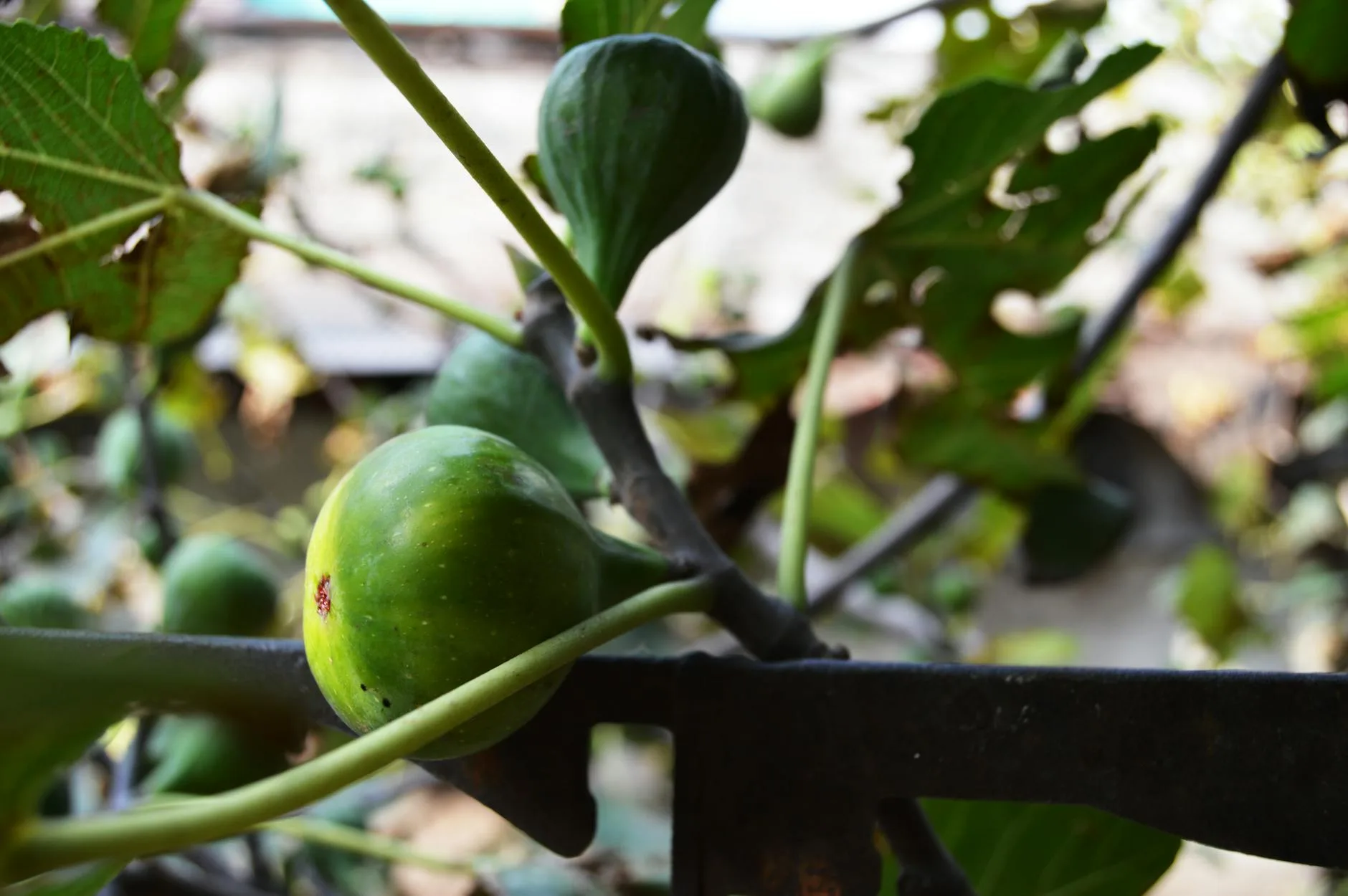
Fig Trees: The Unexpected Winner
If I could only plant one fruit tree in a small UK garden, it would be a fig. Not an apple. Not a plum. A fig.
Why Figs Work So Well
- Self-fertile — no pollinator needed, ever
- Thrive in restricted root space — the worse the soil conditions, the more the tree fruits rather than grows. Planting in a container or a root-restricting pit (lined with paving slabs) is actually the recommended approach
- Love south-facing walls — the one thing every small UK garden has is at least one wall that catches the sun. Figs trained against a warm wall fruit reliably as far north as Yorkshire
- Minimal pruning — once established, you mostly leave them alone
- No major pests in the UK — no codling moth, no scab, no canker. The worst you’ll get is the occasional wasp
The Variety to Buy: ‘Brown Turkey’ (about £15-25)
Brown Turkey is the hardiest and most reliable fig variety for UK outdoor growing. The fruit is dark-skinned with sweet pink flesh. It ripens from August to October depending on your location and the weather. Available from virtually every garden centre, nursery, and online supplier in the country. Our Best Vegetables for Beginners: 10 Foolproof Crops for UK Gardens guide is useful alongside this.
The Secret to More Figs
Remove any figs larger than a pea in November. These won’t ripen and will rob energy from the embryo figs (tiny green dots) that overwinter and develop into next summer’s crop. This simple November prune doubles your harvest.
Pollination Explained Simply
Self-Fertile vs Needs a Pollinator
- Self-fertile trees produce fruit with their own pollen. One tree is enough. Examples: Discovery apple, Victoria plum, Stella cherry, all fig varieties.
- Partially self-fertile trees set some fruit alone but produce more with a pollinator. Examples: Conference pear, Braeburn apple.
- Self-sterile trees need pollen from a different variety to set fruit. Examples: Cox’s Orange Pippin, Bramley, Comice pear.
How Close Does the Pollinator Need to Be?
Within about 50 metres. A neighbour’s apple tree, a crab apple in the front garden, or even an ornamental Malus in the street will do the job. Bees carry pollen surprisingly far. In urban and suburban areas, there’s almost always a compatible variety within range. If not, plant a crab apple — they pollinate most apple varieties and are small enough for any garden.
Pollination Groups
Apple and pear varieties are assigned pollination groups (1-7) based on flowering time. For pollination to work, the two trees need to flower at the same time — which means the same group or one group either side. Don’t overthink this. Group 3 (the most common) overlaps with Groups 2, 3, and 4, covering the vast majority of popular varieties. Our guide to pruning fruit trees covers how to keep your tree in shape once it starts fruiting.
Planting and First-Year Care
When to Plant
- Bare-root trees (November to March): cheaper, wider variety available, establish better long-term. Buy from specialist nurseries.
- Container-grown trees (any time): more expensive but convenient. Available year-round from garden centres.
The ideal planting window is November to December — the tree establishes roots over winter and is ready to grow in spring.
How to Plant
- Dig a hole twice the width of the root ball and the same depth
- Fork the bottom of the hole to break up compacted soil
- Drive a stake (4x4cm, 1.2m long) into the hole slightly off-centre
- Place the tree so the graft union (the bulge where variety meets rootstock) sits 10cm above soil level
- Backfill with the original soil mixed with a handful of bone meal
- Firm the soil gently — don’t stamp on it
- Tie the tree to the stake with a rubber tree tie (about £2 from any garden centre)
- Water thoroughly — 10 litres for a new tree
- Mulch with a 10cm layer of bark chips or garden compost, keeping it 5cm away from the trunk
First-Year Care
- Water weekly through the first summer — 10 litres per session. This is non-negotiable. First-year trees that dry out in July rarely recover properly.
- Remove all fruit in year one. Yes, all of it. It’s painful, but the tree needs to put energy into root and branch growth, not fruit. You’ll get a better tree and bigger harvests from year 2 onwards.
- Check the stake and tie quarterly. Adjust the tie as the trunk thickens — a tight tie strangles the tree.
Pruning Basics for Small Trees
When to Prune
- Apples and pears: winter (November to February) for structural pruning, summer (July to August) for restricting growth
- Plums and cherries: summer only (June to August). Pruning stone fruit in winter risks silver leaf disease entering through the cuts.
- Figs: spring (March) — remove dead wood and any frost-damaged branches
The Three-Cut Rule for Beginners
If pruning feels intimidating, start with just three things:
- Remove dead, damaged, or diseased wood — anything brown, broken, or unhealthy-looking
- Remove crossing branches — branches that rub against each other create wounds that invite infection
- Remove inward-growing shoots — anything growing toward the centre of the tree. You want an open, goblet-shaped canopy that lets light and air reach all the fruit.
That’s it. Those three cuts handle 80% of what a small fruit tree needs. Everything else is refinement. Learning the basics now means less work later — much like starting with good soil fundamentals before planting.
Where to Buy Fruit Trees in the UK
Specialist Nurseries (Best for Variety and Advice)
- Frank P Matthews (frankpmatthews.com) — the biggest fruit tree nursery in the UK. Over 200 apple varieties alone. Excellent website with rootstock guidance. Delivers nationwide.
- Keepers Nursery (keepersnursery.co.uk) — huge range including rare and heritage varieties. Family-run in Kent.
- Walcot Organic Nursery (walcotnursery.co.uk) — organic fruit trees grown without sprays. Good for eco-conscious gardeners.
- Chris Bowers & Sons (chrisbowers.co.uk) — excellent range and competitive pricing. Norfolk-based.
Garden Centres
Wyevale (now Dobbies), B&Q, and Homebase stock fruit trees seasonally (October to March for bare-root, year-round for potted). The range is limited to popular varieties, but the trees are usually healthy and well-grown. The advantage is seeing the tree before you buy.
Online Retailers
Amazon and eBay sell fruit trees, but quality is inconsistent. Stick to specialist nurseries for fruit trees — the extra £5 you pay buys healthier stock, correct rootstock labelling, and actual expertise if something goes wrong.
The RHS fruit growing section is an excellent resource for finding variety-specific advice and locating nurseries near you.
Frequently Asked Questions
Can I grow a fruit tree in a small UK garden? Yes — modern dwarfing rootstocks keep apple trees to 1.5-2.5m, and cordons or espaliers take up almost no ground space. Even a balcony can support a container fruit tree. The key is choosing the right rootstock for your space.
What is the easiest fruit tree to grow in the UK? A Victoria plum on Pixy rootstock. It’s self-fertile, reliable, heavy-cropping, and tolerates most UK soils and conditions. A fig tree (Brown Turkey) is similarly easy and needs even less maintenance.
How long until a fruit tree produces fruit? Trees on dwarfing rootstocks typically produce fruit within 2-3 years of planting. Trees on semi-dwarfing rootstocks may take 3-5 years. Remove all fruit in the first year to help the tree establish — this leads to better harvests long-term.
Do fruit trees need a lot of water? In the first year, yes — water weekly through summer with 10 litres per session. Established trees in the ground are more drought-tolerant but benefit from watering during dry spells, especially while fruiting. Container trees need daily watering in summer.
Can I grow a fruit tree against a wall? Yes — espalier and cordon training are specifically designed for wall-growing. A south or west-facing wall provides warmth and shelter that improves fruit quality. Figs, pears, plums, and cherries all thrive against warm walls. Apples work on any aspect including north-facing, though they fruit better with more sun.