Learning how to compost in a small garden is mostly about choosing a system that suits your space, your food habits and your tolerance for a bit of faff. A full-size heap is lovely if you have room for it, but it is not the only way to turn peelings, cardboard and tired bedding plants into something useful.
For UK flats, terraces, courtyards and pocket-sized gardens, the realistic options are usually a bokashi bucket, a wormery, a compact compost bin or a small hot composting unit. Each one deals with waste differently. Some can live indoors, some need an outdoor corner, and some are better for food scraps than garden cuttings.
The aim is not to compost every last scrap from day one. It is to keep organic waste out of the general bin, avoid smells and pests, and produce a material you can safely use in pots, raised beds or around shrubs.
In This Article
- Start with your space, not the bin
- Bokashi: best for small kitchens and cooked food scraps
- Wormeries: tidy composting for balconies, yards and utility rooms
- Compact compost bins for small gardens
- Hot bins: faster, but less forgiving
- What to add, what to avoid, and how small homes get the balance right
- Using finished compost in pots and small beds
- Smells, flies, rats and slow compost: small-space troubleshooting
- A simple set-up for different small homes
- Frequently Asked Questions
Start with your space, not the bin
For the basic science and safety principles, the RHS composting advice is a reliable starting point. Garden Organic’s what-can-I-compost guidance is useful too, especially if you are checking greens, browns and the ingredients that should stay out of a home bin.
Before buying anything, look at where the system will actually sit. A compost bin that looks neat online can become a nuisance if you have to squeeze past it every time you put washing out, or if it blocks a shared passage. In a flat, check balcony weight limits and lease rules before placing anything heavy outside. Compost, even in a small container, gains weight as it gets wet.
For a balcony or tiny paved garden, a wormery or bokashi bucket is often easier than a conventional bin. For a narrow side return or small lawn, a slim plastic compost bin can work well if it has direct contact with soil. If you have a slightly larger patio and produce plenty of food waste, a sealed hot composting bin may be worth considering.
Think about what you throw away most often. A household that cooks from scratch will have plenty of veg peelings, tea bags, coffee grounds and fruit scraps. A small garden adds dead leaves, soft prunings and spent plants in summer. If most of your waste is food, bokashi or worms may suit you better than a standard cold bin. If you mainly have garden waste, a compact compost bin is usually simpler.
Get the fundamentals right before choosing kit: balance greens and browns, keep the mix aerated, avoid meat and cooked food, and choose a container you can manage in the space you actually have.
Bokashi: best for small kitchens and cooked food scraps
If bokashi sounds like the right route, compare sizes, tap design and refill costs in our guide to the best bokashi bins for UK homes. For a broader beginner setup, how to start composting covers the first decisions before you buy.
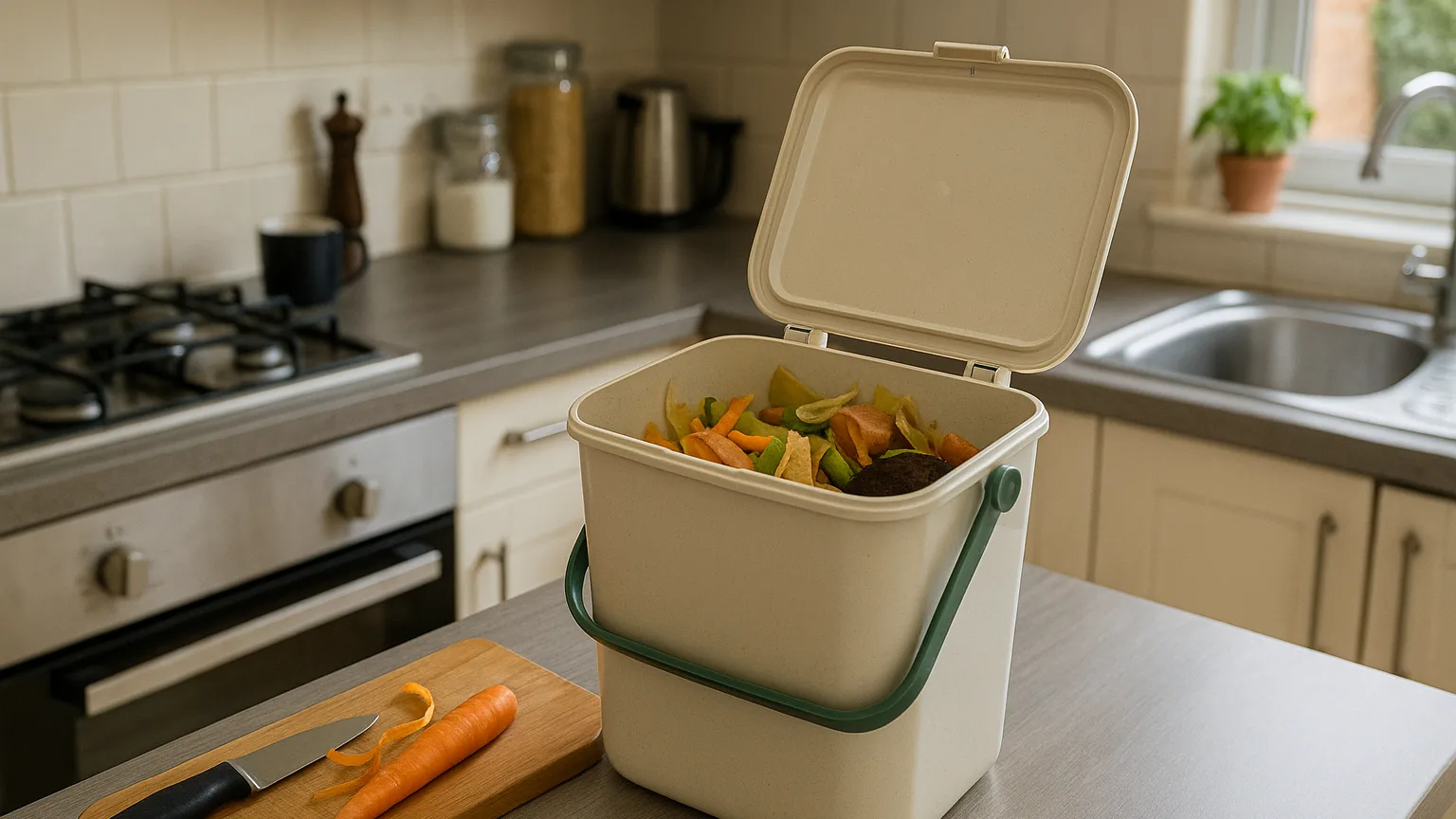
(Image: Bokashi compost bucket with vegetable scraps in a kitchen)
Bokashi is often the most practical first step for flat dwellers because it lives in the kitchen and takes very little floor space. It is not composting in the traditional sense. It ferments food waste in an airtight bucket using a bran inoculated with beneficial microbes. The result is pickled food waste that still needs to be buried, added carefully to a compost bin, or processed further in a soil factory.
The main advantage is the range of food it can handle. Unlike most wormeries and standard compost bins, bokashi systems can take cooked food, small amounts of meat and fish, dairy leftovers and plate scrapings. That makes it useful for households that are trying to reduce smelly caddy waste between council collections.
You usually need two buckets. Fill one while the other ferments for around two weeks. Press scraps down firmly, sprinkle bokashi bran over layers, and keep the lid tightly sealed. Drain the liquid every few days if your bucket has a tap. Diluted heavily, it can be used around established plants, but do not pour it neat onto roots. It is acidic and strong.
- Good for: flats, shared houses, cooked food scraps, people without much outdoor space.
- Less good for: anyone with nowhere to bury or finish the fermented material.
- Watch out for: fruit flies if the lid is left open, sour liquid leaks, and overfilling the bucket.
- Outdoor need: not much during filling, but you still need a final destination for the fermented contents.
If bokashi sounds right, compare sizes, taps and seal quality before buying. The guide to the best bokashi bins for UK homes is a good place to start, especially if the bucket will be visible in a small kitchen.
The common mistake is treating bokashi output as finished compost. It is not ready to scatter around lettuce or mix straight into seed compost. Bury it in a garden trench, add small amounts to an outdoor compost bin with plenty of dry browns, or use a lidded tub of soil to break it down further. Leave it several weeks before planting into that area.
Wormeries: tidy composting for balconies, yards and utility rooms
Wormeries suit some small homes brilliantly and frustrate others, so it is worth checking the practical trade-offs before ordering. Our UK wormery guide compares indoor and outdoor options, while compost troubleshooting helps if smells, flies or slow breakdown appear later.
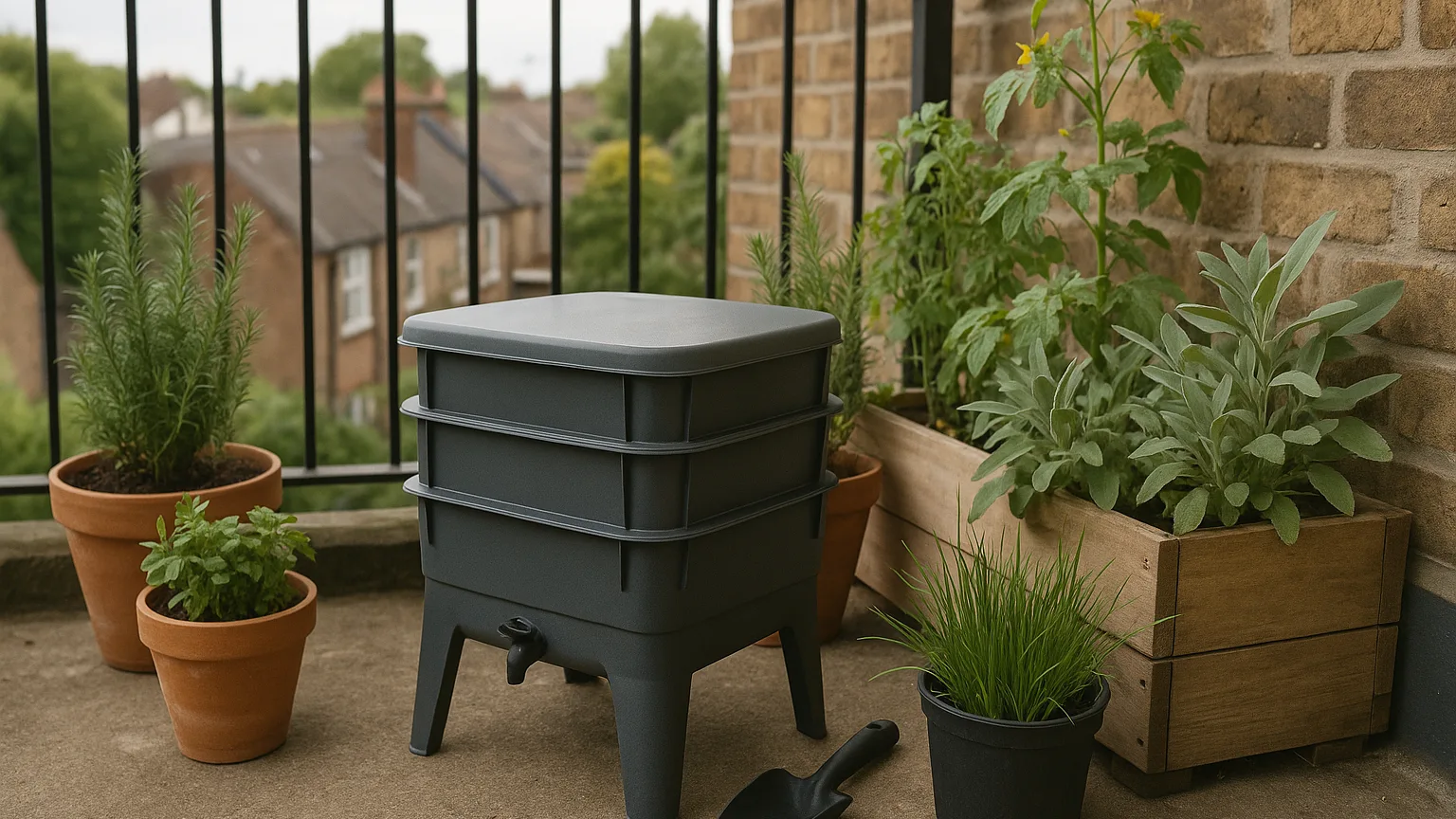
A wormery uses composting worms to eat food scraps and bedding. It can produce fine worm compost and a nutrient-rich liquid, often called worm tea. For a small garden or balcony, it is one of the neatest systems because the container is enclosed and stacked, rather than spread out like a heap.
Wormeries suit people who can feed them little and often. The worms prefer a steady diet of small pieces rather than sudden buckets of waste. They do well with raw fruit and vegetable scraps, coffee grounds, crushed eggshell, small amounts of plain cooked rice or pasta, and damp shredded cardboard. They dislike large quantities of citrus, onion, chilli, oily food, meat and dairy.
Temperature matters in the UK. Composting worms are happiest in mild conditions, roughly between 10C and 25C. A sheltered balcony, shed, garage or utility room is usually better than an exposed corner that bakes in summer and freezes in winter. If the wormery has to stay outside, keep it out of direct sun and raise it off very cold paving during frosts.
(Image: Compact wormery compost bin beside balcony plants)
A wormery should smell earthy, not rotten. Bad smells usually mean there is too much food, not enough air, or soggy bedding. Add torn cardboard or egg boxes, stop feeding for a few days and check the drainage tap is not blocked. If you are choosing your first model, this UK-focused guide to the best wormeries for indoor and outdoor use compares the sort of designs that suit smaller homes.
- Chop scraps smaller than you would for a garden bin.
- Cover fresh food with damp cardboard or existing bedding to deter flies.
- Add crushed eggshell occasionally to reduce acidity.
- Empty liquid regularly and dilute it well before using on plants.
- Do not add pet waste, cat litter or anything treated with chemicals.
Worm compost is strong and valuable. Use it as a top dressing for pots, mix a little into container compost, or add it around hungry plants. For seedlings, use it sparingly; too rich a mix can cause problems with young roots.
Compact compost bins for small gardens
A compact compost bin is the closest small-space version of the traditional heap. It suits households with at least a little outdoor ground, especially if you have garden waste as well as kitchen peelings. The bin should ideally sit on soil, not concrete, so worms and soil organisms can move in and excess moisture can drain away.
For a tiny garden, look for a narrow bin with a secure lid and a base that can be pegged down or settled firmly into the soil. Dark plastic dalek-style bins are common because councils often sell them at a discount. They are not glamorous, but they are cheap, light and effective if managed well.
A cold compost bin breaks material down slowly. In a small garden this can be an advantage, because it is forgiving. You can add lawn clippings, leaves, soft plant stems, peelings, tea leaves and cardboard over time. The trade-off is speed. Finished compost can take six months to a year, sometimes longer if the bin is dry, overfilled with one material, or rarely disturbed.
Balance is the trick. Greens are moist, nitrogen-rich materials such as peelings, fresh grass, coffee grounds and annual weeds that have not gone to seed. Browns are drier, carbon-rich materials such as torn cardboard, egg boxes, autumn leaves, straw, woody prunings cut small and plain paper. A small bin often goes slimy because it receives lots of kitchen scraps but not enough browns.
Keep a bag or lidded tub of dry browns beside the bin. Every time you add food waste, add a handful or two of torn cardboard or dry leaves. This is the simplest way to prevent sour smells. The guide on what can and cannot go in a compost bin is worth bookmarking if you are unsure about tea bags, citrus, weeds or cooked food.
Do not put cooked leftovers, meat, fish, dairy or oily food into an ordinary open-bottomed garden bin in a small urban garden. They can attract rats and foxes, and neighbours will not thank you for the smell. If you want to compost those items, use bokashi or a sealed hot composting system designed for that job.
Hot bins: faster, but less forgiving
For small gardens where speed matters, compare the trade-off in hot bins versus standard compost bins. Before adding scraps, keep our guide to what can and cannot go in a compost bin nearby; most small-space problems start with the wrong ingredients.
Hot composting bins are insulated containers designed to keep the composting mass warm. In theory they can process food and garden waste far faster than a standard cold bin. In a small garden, that speed is appealing because you do not want half-rotted material sitting around for months.
They are not magic boxes. A hot bin needs regular feeding, the right mix of chopped waste, enough volume to generate heat and careful moisture control. If you only add a small caddy of peelings once a week, it may not stay hot. If you add lots of grass clippings at once, it can become wet and sour.
A sealed hot bin can suit a household that cooks a lot, has some garden waste and wants to deal with more food types than a normal bin allows. It is less suitable if you are away often, produce very little waste, or want the lowest-maintenance option. It also costs more than a basic compost bin, so be honest about how much you will use it.
For a deeper comparison of speed, effort and value, see hot bin vs standard compost bin: which breaks down faster?. In brief, hot bins can be quicker, but only if you manage them as intended.
What to add, what to avoid, and how small homes get the balance right
In a flat or small garden, the biggest problem is not usually lack of enthusiasm. It is too much wet food waste and not enough dry material. Keep a small stash of browns indoors: torn egg boxes, toilet roll tubes, shredded uncoated cardboard, dry leaves from a walk, or paper bags with no plastic lining. Avoid glossy paper and anything heavily printed.
Cutting materials smaller makes a real difference in compact systems. Whole cabbage leaves, large carrot tops and long stems can mat together and exclude air. Chopped scraps, torn cardboard and short prunings create more surface area and break down more evenly.
- Usually fine in small compost systems: raw fruit and vegetable scraps, coffee grounds, loose tea leaves, crushed eggshells, dead flowers, soft plant trimmings, grass clippings in thin layers, autumn leaves and plain cardboard.
- Use with care: citrus peel, onion skins, cooked plain grains, old potting compost, wood ash in tiny amounts, and weeds that have not seeded.
- Avoid in standard bins and wormeries: meat, fish, dairy, oily food, pet faeces, cat litter, diseased plants, perennial weed roots, coal ash, treated wood shavings and plastic-labelled tea bags.
- Bokashi exception: cooked food, dairy, meat and fish can go into many bokashi buckets, but the fermented material still needs safe finishing.
If you are new to the process, our beginner composting guide explains the broader method without assuming you have a large garden.
Using finished compost in pots and small beds
Finished compost should look dark and crumbly, with no strong rotten smell. You may still see bits of eggshell, twigs or avocado skin. That is normal. Sieve them out and return the larger pieces to the bin.
Home-made compost is not the same as bagged seed compost. It varies in nutrients, texture and maturity. In small gardens, use it as a soil improver rather than the only growing medium. Mix it into beds, spread a thin layer around shrubs, or blend it with peat-free multipurpose compost for large pots.
For containers, avoid filling a whole pot with rich, immature compost. It can hold too much water, slump down, or scorch sensitive roots if it is still actively breaking down. A safer mix is roughly one part mature home compost to two or three parts bought peat-free compost, adjusted for the plant. Mediterranean herbs need a grittier, freer-draining mix. Courgettes, tomatoes and squash can take richer material.
Bokashi-treated soil should be left until the scraps have disappeared and the acidity has mellowed. Worm compost should be used in modest amounts because it is concentrated. If in doubt, test a small amount around established plants before using it widely.
Smells, flies, rats and slow compost: small-space troubleshooting
Small-space composting has less room for error because any smell is close to the kitchen door, balcony seating or neighbours. Most problems have a simple cause.
A rotten smell usually means too much wet green material and not enough air. Add torn cardboard, dry leaves or shredded paper, then mix gently if the system allows. In a wormery, do not churn everything up; lift the top layer carefully and add dry bedding. In bokashi, a sweet-sour pickle smell is normal, but a putrid smell suggests air has entered or the bucket contents have gone wrong.
Fruit flies usually arrive with exposed scraps. Bury fresh food under bedding in a wormery, close bokashi lids immediately, and cover food waste in a compost bin with browns. A sheet of damp cardboard on top of a wormery tray can help. Avoid leaving a kitchen caddy uncovered for days.
Rats are a more serious concern. Do not add meat, fish, dairy, cooked leftovers or bread to an ordinary open-bottomed bin. Keep lids secure, avoid spilling food around the base, and consider a base plate or wire mesh under the bin if rats are common locally. If you see repeated rat activity, stop adding food waste and seek local pest advice.
Slow compost is often too dry, too cold, too woody or too compacted. Add moisture if the contents are dusty, add greens if it is all dry leaves and cardboard, and chop bulky stems. In winter, expect everything to slow down. That is normal in the UK climate.
For a fuller problem-solving guide, see compost troubleshooting for smells, pests and slow decomposition. It is especially useful if you have inherited a neglected bin or moved into a flat with an old wormery on the balcony.
A simple set-up for different small homes
For a flat with no outdoor space, a bokashi bucket is usually the most realistic option, provided you have somewhere to take the fermented material afterwards. That might be a relative’s garden, an allotment, a community garden that accepts it, or a dedicated soil tub if you have a balcony. If none of those is available, check your council food waste collection instead of forcing a system that cannot be finished properly.
For a flat with a balcony, a wormery is often the best long-term choice for raw fruit and veg scraps, supported by a bokashi bucket if you want to include cooked food. Keep both shaded and secure. Do not let liquid drip onto balconies below.
For a terraced house with a paved yard, use a wormery or sealed composter rather than an open heap. If you have a raised bed, a small amount of finished worm compost or matured bokashi soil can feed container crops well.
For a small garden with soil, a compact compost bin is inexpensive and useful. Pair it with a kitchen caddy and a dry browns tub. If you cook a lot and want faster results, consider a hot bin, but only if you will feed it regularly enough to keep it working.
The best system is the one you can live with in February, not just the one that looks appealing in spring. If it is easy to reach, easy to empty and not embarrassing when guests step outside, you are far more likely to keep using it.
Frequently Asked Questions
Can I compost in a flat without a garden? Yes, but you need an outlet for the material. A bokashi bucket can ferment food waste indoors, but the contents still need burying or further composting. A wormery can work indoors or on a balcony if temperatures are stable and you feed it carefully. If you have no balcony, no shared garden and nowhere to take finished material, your council food waste collection may be the better option.
Will a wormery smell in a small kitchen or balcony? A healthy wormery should smell earthy. Bad smells usually mean overfeeding, soggy bedding or blocked drainage. Add torn cardboard, stop feeding for a few days and make sure liquid can drain. Avoid meat, dairy, oily food and large amounts of citrus or onion.
Can I put cooked food in a small compost bin? Not in a normal open-bottomed compost bin, especially in a small urban garden. Cooked food, meat, fish, dairy and oily scraps can attract pests and smell. Use bokashi or a sealed hot composting system designed for those materials, and follow the manufacturer’s guidance.
How long does compost take in a compact bin? A small cold compost bin often takes six to twelve months to produce usable compost. It can be quicker in warm weather if you chop materials, balance greens with browns and keep it moist but not wet. In winter, decomposition slows down.
What is the easiest composting method for beginners with a small garden? For a small garden with soil, a basic compact compost bin is usually the easiest and cheapest start. Add raw kitchen scraps and garden waste with plenty of cardboard or dry leaves. For flats or households with lots of cooked food waste, bokashi may be easier, as long as you have a plan for finishing the fermented contents.