Netting fruit trees against birds works best when it is timed tightly and held away from the fruit, not thrown over the branches like a dust sheet. The aim is to protect ripening cherries, plums, apricots, figs and soft-trained fruit while keeping pollinators, birds and squirrels out of trouble. A good setup is boring to look at: taut mesh, no loose pockets, no gaps at ground level and no netting left on longer than needed.
In This Article
- When Fruit Trees Actually Need Netting
- How To Net Fruit Trees Against Birds Without Trapping Wildlife
- Choosing The Right Netting For UK Fruit Trees
- Small Trees, Wall Trained Trees And Pots
- Common Netting Mistakes That Cost Fruit
- Removing, Cleaning And Storing Netting
- Frequently Asked Questions
When Fruit Trees Actually Need Netting
Most fruit trees do not need bird netting all year. In fact, leaving netting on during blossom can reduce pollination, trap wildlife and make pruning or watering more awkward. The useful window is usually from fruit swelling or colouring up until harvest.
That timing varies by crop. Cherries are the classic problem because birds can strip a small tree just as the fruit starts to colour. Plums, gages, apricots and figs can also need protection. Apples and pears are often less urgent because a mature tree normally carries more fruit than a family can use, although trained cordons and dwarf trees are more exposed.
Net After Pollination, Not Before
If the tree is flowering, leave it open unless you have a very specific reason to cover it overnight for frost. Bees and other pollinators need access to blossom. Netting too early is one of those jobs that feels organised but quietly reduces the crop you are trying to protect.
The RHS advice on cherries is a good practical benchmark: net the tree or individual branches once fruit needs protection, keep netting taut and secure, and hold it away from the fruit with canes or poles where needed: RHS cherry growing advice.
Which Fruit Is Worth Protecting
Prioritise netting where the crop is small, high-value or easy for birds to reach:
- Cherries: net as soon as fruit starts to colour.
- Apricots and peaches: protect as fruit swells and ripens, especially on warm walls.
- Plums and gages: net vulnerable branches if birds have found them before.
- Figs: cover ripening fruit clusters, especially on small wall-trained plants.
- Dwarf apples and pears: net only if birds are taking a meaningful share.
For large established apple or pear trees, netting the whole canopy is usually more hassle than it is worth. Pick earlier, use a fruit picker, or accept some losses unless the damage is severe.
Watch The Birds, Not The Calendar
Bird pressure changes by garden. A cherry tree beside a hedge may be hit much harder than one in an open, busy garden. The first peck marks are your cue. Once birds learn a tree is ready, they come back with impressive commitment. Fair play to them, but still.
If you have grown fruit in pots, this is easier. Move the pot near the house for a few weeks, net it properly, then move it back after harvest. The site’s guide to growing fruit in containers is a useful companion if you are deciding which trees are manageable in a small space.
How To Net Fruit Trees Against Birds Without Trapping Wildlife
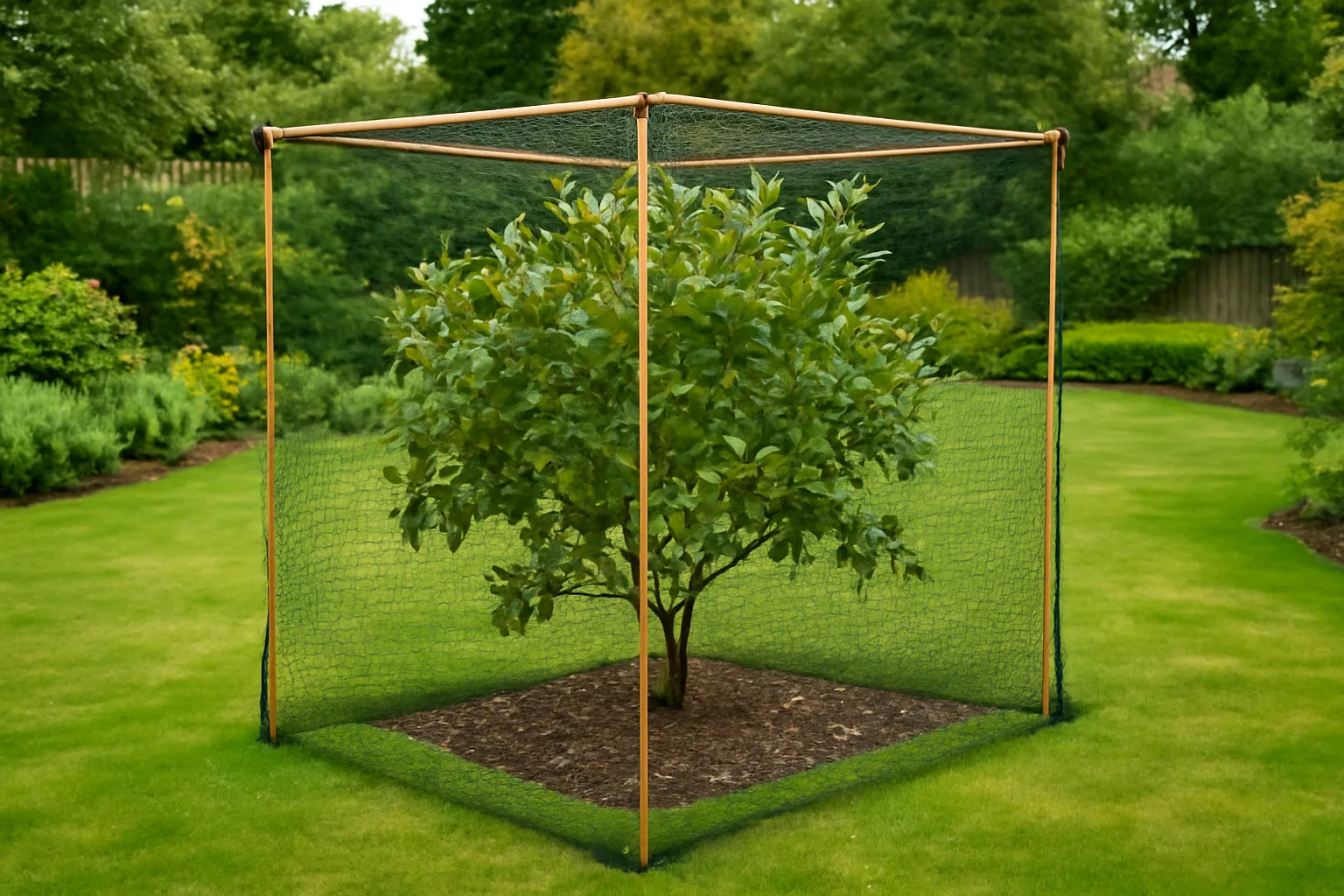
This is the core of the job. The safest way to net fruit trees against birds is to create a light frame around the fruit, pull the mesh tight, and fasten every loose edge. Loose netting is what causes tangles, gaps and frustration.
Step-By-Step Method
Use this for a dwarf or semi-dwarf tree up to about 2.5m tall:
- Check the fruit stage: wait until fruit has set and is swelling or colouring, not while the tree is in full blossom.
- Prune obvious whips first: remove or tie in long shoots that will poke through the net and make holes.
- Build a simple frame: use bamboo canes, hazel poles, timber stakes or flexible hoops to hold the net off the fruit.
- Drape the net over the frame: keep it clear of fruit clusters so birds cannot peck through the mesh.
- Pull it taut: avoid sagging pockets where birds can get caught or squirrels can chew their way in.
- Secure the base: peg it down, tie it to the pot, or clip it to the frame so there are no ground-level gaps.
- Inspect it daily in the first week: check for trapped wildlife, loose corners and fruit pressing through the mesh.
That daily check is not optional if the net is new or improvised. The RSPB suggests using netting carefully and keeping it taut so birds are deterred rather than caught: RSPB advice on stopping birds eating fruit.
Keep The Net Away From Fruit
Birds can peck through loose netting if cherries or plums press against it. That is the mistake I see most often on small trees: the gardener has technically covered the tree, but the net is touching the crop everywhere. The birds just perch outside and treat it like a serving hatch.
Use canes with soft caps, old tennis balls, cane toppers or short lengths of foam to stop the poles tearing the net. A pack of bamboo canes costs about £6-£12 from B&Q, Wickes or a garden centre. Cane caps are usually £3-£6 for a small pack.
Secure The Bottom Properly
For trees in the ground, peg the net down with ground staples or tent pegs every 30-50cm. For potted trees, gather the net below the pot rim and tie it around the pot with soft garden twine. Do not tie tightly around the trunk. It looks neat, but it leaves the lower canopy open and can rub bark.
On a small patio tree, clothes pegs or reusable plant clips work well for joining overlaps. Expect to pay £4-£8 for a bag of clips. Avoid thin wire twist ties where they touch shoots; they can bite into new growth quickly in warm weather.
Choosing The Right Netting For UK Fruit Trees
Fruit-tree netting has to balance three jobs: keep birds out, avoid trapping wildlife, and survive more than one season. The cheapest mesh can work, but if it tears on the first windy week it was not cheap. It was just annoying.
Mesh Size And Material
For bird protection, choose visible netting with a mesh small enough to stop birds pushing through but not so flimsy that it collapses into the branches. Many garden centres sell bird netting in 15-20mm mesh. Fine insect mesh is useful for some vegetable crops, but it can block too much airflow and is rarely needed for fruit trees.
Good options:
- Reusable bird netting: about £8-£20 for a small 2m x 5m pack.
- Heavy-duty fruit cage netting: about £25-£60 depending on size.
- Plastic-free or reused netting: often better environmentally, but still needs daily safety checks.
- Galvanised mesh panels: expensive at £30-£80 for small frames, but long lasting for permanent cages.
If you are protecting one dwarf cherry, a £12-£20 pack of decent bird netting and £10 of canes may be enough. If you have several trees, a walk-in fruit cage can cost £120-£400+ depending on size and frame material. The site’s best fruit cages guide is better for that bigger decision.
Buy Bigger Than The Canopy
Measure the tree’s width and height, then add at least 50cm in every direction. You need slack to go over the frame and reach the ground, but not so much that it hangs in loose folds.
For a 1.5m dwarf tree, a 2m x 5m net often works if the frame is simple. For a 2m tree, look at 4m x 5m or larger. Wall-trained fruit is different because you are covering a flat shape rather than a rounded canopy.
Colour And Visibility
Black or green netting disappears visually, which looks tidy but can be harder for wildlife to see. White or pale netting is more obvious, though not always pretty. In a front garden, you may choose a tidier dark net; on an allotment, visibility and safety matter more than aesthetics.
Whatever colour you choose, tension matters more. A taut dark net is safer than a pale net hanging like a loose hammock.
Small Trees, Wall Trained Trees And Pots
The easiest fruit trees to protect are the ones you can reach. That is one reason dwarf trees, cordons, espaliers and fan-trained forms make sense in UK gardens. You can prune them, pick them and net them without turning the job into a ladder-based negotiation.
Dwarf And Patio Trees
Dwarf cherry, plum or apricot trees are ideal candidates for temporary netting. Put three or four canes around the pot or root area, join them loosely at the top if needed, then drape the net over the frame.
The key is access. Leave one overlap that you can unclip for watering and picking. If you have to dismantle the whole thing every time you check the fruit, you will stop checking it. Ask me how I know.
Wall-Trained Trees
Wall-trained peaches, apricots, cherries and pears are much easier to net than free-standing trees because the shape is flat. Fix hooks or screw eyes into the fence or wall frame, then clip netting over the fruiting area once fruit has set.
Keep the net away from the wall enough to stop fruit pressing through it. For a fan-trained cherry, a simple timber batten or cane framework can create that gap. If you already prune your fruit trees, the guide to pruning fruit trees will help keep the framework net-friendly.
Fruit In Containers
Container fruit gives you options. You can move a potted cherry or fig into a greenhouse, porch or sheltered corner while fruit ripens. That is often cleaner than building a netting structure in the middle of a windy patio.
Do not forget watering. A netted pot dries just as quickly as an unnetted one, and a greenhouse can turn into an oven in July. Container fruit under stress drops fruit, which is a deeply irritating way to lose the crop after successfully beating the birds.
Common Netting Mistakes That Cost Fruit
Most failures are not because netting is a bad idea. They are because the net goes on at the wrong time, touches the fruit, or is left flapping loose after a windy night.
Netting Too Early
Covering blossom blocks pollinators. If you do this by accident, uncover the tree during the day while flowers are open. Net again later when fruit has set and birds become the real problem.
Using The Tree As The Frame
If the branches are the frame, the fruit touches the net. Birds peck through it, branches rub holes in it and new shoots grow through the mesh. Use a separate frame, even if it is only a few canes and clips.
Leaving Gaps At The Bottom
Birds are not stupid. If there is a gap at the bottom, they may find it. Squirrels usually will. Peg the bottom down and check after wind. A pack of U-shaped ground pegs costs about £5-£10 and is worth having in the shed.
Forgetting To Check For Trapped Wildlife
This is the serious one. Loose netting can trap birds, hedgehogs and other wildlife. Check daily, especially after strong wind or when you first fit the net. If a setup keeps sagging, rebuild it rather than hoping it will behave.
The broader garden netting guide covers crop protection across the plot, but fruit trees deserve extra care because the mesh is often higher, looser and closer to woody branches.
Removing, Cleaning And Storing Netting
Netting should come off as soon as the crop is picked. Leaving it on through autumn and winter makes pruning awkward, catches leaves, and increases the chance of wildlife problems. It also shortens the life of the net.
Remove It After Harvest
Pick the fruit, unclip the net, shake off leaves and check for tears. If a tree ripens in stages, open one side for picking and close it again. Do not leave a half-open net hanging overnight; that creates the worst of both worlds.
If birds only take a few fruits from a heavy plum or apple crop, you may decide not to net next year. Netting is a tool, not a badge of proper gardening. Sometimes sharing a small percentage is cheaper than building a frame for a crop you cannot eat anyway.
Clean And Repair
Dry netting before storing it. Wet mesh stuffed into a bag grows mildew and becomes horrible by spring. Small holes can be patched with spare netting and twine. If the mesh tears every time you pull it, replace it.
Store each net labelled by tree or size: “patio cherry 2m x 5m”, “fig wall net”, “plum branch sleeve”. Future you will be less cross. For wider fruit planning, the article on fruit growing success stories from UK gardeners is useful because it shows how much easier fruit gets when trees stay manageable.
What I Would Buy
For one small fruit tree, I would buy a reusable bird net around 4m x 5m, six bamboo canes, cane caps and a bag of clips. That should cost roughly £30-£45 from B&Q, Wickes, Amazon UK or a local garden centre. For two or three dwarf trees, step up to heavier fruit-cage netting and a more rigid frame. For a serious soft-fruit and dwarf-tree area, look at a proper fruit cage rather than wrestling with loose sheets every June.
The best setup is the one you will actually inspect. If it takes 20 minutes to open, you will leave fruit too long, miss damage and swear at it in the rain. Keep it simple, taut and removable.
Frequently Asked Questions
When should I net fruit trees against birds? Net after pollination, usually once fruit has set and starts swelling or colouring. Cherries often need netting earlier than apples or pears because birds target them quickly.
Can I leave netting on fruit trees all year? No. Remove netting after harvest. Year-round netting can trap wildlife, catch leaves, rub branches and make pruning harder.
What size netting do I need for a dwarf fruit tree? Many dwarf trees need at least 2m x 5m, but measure the height and width, then add at least 50cm each way so the net reaches the ground over a frame.
Should netting touch the fruit? No. Keep netting away from fruit with canes, hoops or a frame. If fruit presses against the mesh, birds can peck through it.
Is a fruit cage better than netting a tree? For several small trees or a soft-fruit bed, a fruit cage is easier and safer long term. For one patio cherry or fig, temporary netting is usually cheaper and quicker.