The best compost for raised beds in the UK depends on whether you are filling a new frame or feeding soil that is already there. For a new bed, start with a substantial soil component and add organic matter; do not assume that a stack of potting-compost bags is the best way to fill the whole depth. For a small DIY bed, Westland Top Soil supplies the mineral part and RocketGro Fruit & Veg Compost supplies a peat-free organic component. For several large beds, compare local bulk topsoil and compost by delivered volume before buying bags.
The four products below solve different parts of that job. None is presented as a complete, one-bag formula for every raised bed. First calculate the volume you need, then decide whether you need a soil base, a vegetable-growing compost or a top-up for established soil.
Our four top picks

Westland Top Soil 35L
Best bagged soil base
Mineral soil for a small DIY mix; it is not compost or a complete bed fill.
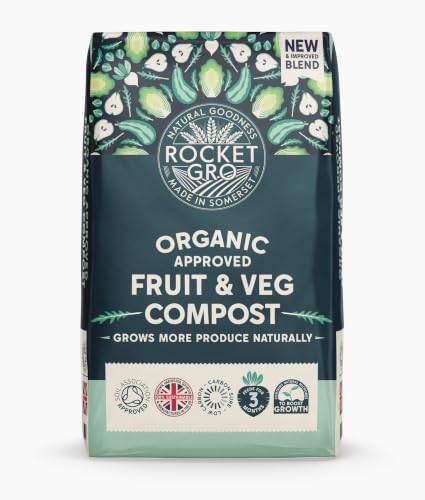
RocketGro Fruit & Veg Compost 40L
Best peat-free vegetable compost
A vegetable-growing compost to mix with soil or use around established crops.

Westland New Horizon All Plant 2 × 40L
Best two-bag option
Two peat-free 40L bags for a small bed or planting layer, not a large-bed shortcut.

RocketGro Soil Improver 40L
Best for refreshing existing soil
Organic matter for a settled bed; mix into or spread over existing soil.
In this guide
- Comparison at a glance
- Choosing the best compost for raised beds
- The four bagged products in detail
- How to fill a raised bed
- Refreshing an existing bed
- How we chose
- The bottom line
- Frequently Asked Questions
Comparison at a glance
| Product | What it is | Best use | Not a substitute for |
|---|---|---|---|
| Westland Top Soil 35L | Bagged topsoil | Mineral base for a small DIY fill | Organic matter or a full bulk order |
| RocketGro Fruit & Veg 40L | Peat-free growing compost | Vegetable planting layer or organic component | The whole mineral-soil base |
| New Horizon All Plant 2 × 40L | Peat-free multipurpose compost | Convenient small-bed bagged option | Bulk soil for a large bed |
| RocketGro Soil Improver 40L | Peat-free soil conditioner | Annual surface top-up or blending into soil | A complete new-bed fill |
If you need the frame as well as the growing medium, our raised-bed kit guide covers materials and dimensions. This comparison is about what goes inside the frame.
Choosing the best compost for raised beds
New bed or annual top-up?
A new raised bed needs a volume of growing medium; an established bed usually needs a much smaller addition of organic matter. The RHS advises using topsoil, organic matter and horticultural sharp sand as components of a general raised-bed mix, while noting that soil conditions and the bed base matter. Its raised-bed filling guidance is a better starting point than a universal claim that pure multipurpose compost lasts for years. If your own topsoil is clean and suitable, using it may be more sensible than paying to import bagged soil.
Peat-free compost is one component
Peat-free compost can add organic matter and help establish vegetable crops, but different bags are formulated for different jobs. Check whether a product is a growing medium, a soil improver or topsoil; those labels are not synonyms. Do not apply one arbitrary ratio to every bed. A bed on open ground can interact with the soil below, while a bed on paving needs deliberate drainage and a suitable fill. Our raised-bed lining guide discusses the base and sides separately.
Start with litres, not bag count
Multiply length × width × fill depth in metres, then multiply by 1,000 for litres. A 1.2m × 2.4m bed filled to 0.3m takes about 864L before settlement. That is more than twenty 40L bags. For that scale, compare delivered bulk topsoil and organic matter with local suppliers rather than assuming an online multipack is economical. Measure the usable fill depth, not the outside frame height, and allow room below the rim.
The four bagged products in detail
Best bagged soil base: Westland Top Soil 35L
This 35L bag is topsoil, not potting compost. That is why it is a useful mineral component when you are making a small mix rather than buying an entire bed of compost. It can add weight and soil structure, while the organic component supplies the material that decomposes and needs replenishing. A single bag will not fill much of a deep bed; calculate your volume first. For a large job, compare a screened bulk topsoil source and inspect its specification and delivery access. The RHS topsoil buying guide explains why grade matters.
- Buy it if: you need a bagged mineral component for one small bed or a repair.
- Skip it if: you need enough material for several large beds; investigate a bulk supply.
Best peat-free vegetable compost: RocketGro Fruit & Veg 40L
RocketGro makes this 40L peat-free compost for fruit and vegetable growing. Its maker describes green compost, its soil improver and wood fines in the blend. Use it as an organic component alongside suitable soil, or around vegetable plants in a smaller bed; do not mistake it for a bag of topsoil. The maker says it is richer than a seed-starting compost, so start delicate seedlings in an appropriate seed mix and move established plants on. Check the actual bag volume against your fill calculation before ordering.
- Buy it if: you want peat-free compost for a vegetable planting layer.
- Skip it if: you are looking for the mineral base or a fine seed-sowing medium.
Best convenient two-bag option: New Horizon All Plant 2 × 40L
This exact option contains two 40L bags of Westland New Horizon All Plant Compost. The manufacturer describes the range as naturally peat-free and suitable for general planting. It is convenient if a small bed or a planting layer needs bagged medium and you want both bags in one purchase. The pack does not become a soil-based raised-bed mix merely because it is sold in two bags, and 80L covers only a fraction of a large frame. Compare the delivered total with buying locally before you commit to many packs.
- Buy it if: you need a modest amount of peat-free bagged growing medium.
- Skip it if: you need to fill a large bed mainly with durable mineral soil.
Best soil refresh: RocketGro Soil Improver 40L
This 40L peat-free product is a soil conditioner, not a finished growing medium to use alone. It makes more sense when a raised bed already has a sound soil base but the surface needs fresh organic matter. Spread it over the bed or incorporate it as the maker directs, avoiding a deep layer against plant stems. When an established bed is doing well, there is no reason to empty it and start again. The limitation is the same as with any 40L bag: it is for improvement, not filling a new large frame from bottom to top.
- Buy it if: you have existing soil and want to replenish organic matter.
- Skip it if: you need a complete growing medium or a mineral topsoil base.
How to fill a raised bed
Calculate the fill and choose the base
For a small new bed, start with suitable topsoil or your own garden soil, then blend in well-rotted organic matter. The RHS gives a general example of seven parts topsoil, three parts organic matter and two parts horticultural sharp sand for most raised beds, with a different mix for beds on hard surfaces. That is an example to adapt, not a promise that every bagged compost follows it. If the existing soil has drainage or contamination problems, resolve those before buying the fill. The soil-types guide helps identify the starting ground.
Check bulk deliveries and access
A full-size bed can require hundreds of litres. Ask a local supplier what its stated volume covers, whether the topsoil is screened and suitable for growing, how the load is delivered and where it can be unloaded. A tonne is a weight, not a fixed number of litres: moisture and soil composition change the conversion. Compare total delivered cost and handling effort, not a bag price alone. Keep heavy bags and bulk heaps where they will not obstruct drains, paths or access.
Leave room at the top
Fill below the rim rather than heaping material above a frame that cannot contain it. Water, let the medium settle and top up if needed before planting. A raised bed on paving must drain properly; adding gravel at the bottom is not a substitute for drainage openings. Avoid burying a thick layer of fresh woody material directly in a shallow root zone.
Refreshing an existing bed
Compost and other organic matter decompose, so a settled bed may need topping up. Use mature garden compost, a suitable soil improver or another appropriate organic material in a layer matched to the crop and soil, rather than replacing the whole fill on a calendar. Keep fresh manure away from edible crops unless it has been properly composted and used in accordance with the supplier’s guidance. Our compost maturity guide explains why unfinished material is different from ready-to-use compost.
If a bed drains poorly, test and address the cause rather than adding grit by habit; if it dries quickly, check watering and mulch. A home compost bin can supply future top-ups, but it will not produce a whole new bed of finished material overnight.
How we chose
We compared exact UK products by their stated job, volume, peat-free status and customer rating, then checked the distinction between topsoil, growing compost and soil improver against manufacturer information and RHS raised-bed guidance. We did not treat a positive bag review as proof of long-term performance in every soil or climate. The shortlist covers four useful buying decisions, not four interchangeable ways to fill the same bed.
The bottom line
For a small new vegetable bed, combine a sound soil base such as Westland Top Soil with a peat-free organic component such as RocketGro Fruit & Veg Compost, adjusting the mix to the bed and the ground beneath it. New Horizon is a convenient bagged alternative for a modest planting layer; RocketGro Soil Improver is the pick for refreshing soil you already have. For a large bed, calculate the litres first and compare local bulk topsoil and compost. Buying dozens of small bags is rarely the first decision to make.
Frequently Asked Questions
Can I fill a raised bed with only multipurpose compost? You can grow in bagged compost, but a large raised bed filled entirely with potting compost is often costly and its organic material will settle and need replenishing. A suitable soil component gives a more durable base; check the bed and crop before choosing a mix.
How much growing medium does my raised bed need? Multiply length × width × fill depth in metres, then multiply by 1,000. A 1.2m × 2.4m bed filled to 0.3m needs about 864L before settlement. Use the internal dimensions and actual fill depth.
Is topsoil the same as compost? No. Topsoil supplies mineral soil and structure; garden compost or a soil improver adds decomposed organic matter. Bagged growing compost is a formulated medium for planting. Read the product description before treating one as a substitute for another.
Should I use peat-free compost in a raised bed? Peat-free compost can be a suitable organic component or planting layer. It does not automatically contain the mineral soil needed for a durable full-depth fill, so match the product to the bed and the crops.
How often should I top up a raised bed? Check the level and soil condition between crops or before the next growing season. Add mature compost or a suitable soil improver when organic matter has settled; a fixed depth every year is not necessary for every bed.
Do I need to line the bottom of a raised bed? An open-ground bed can usually remain in contact with the soil below after perennial weeds are dealt with. A bed on paving needs drainage provision. Side lining and base lining solve different problems, so follow the frame and site guidance.